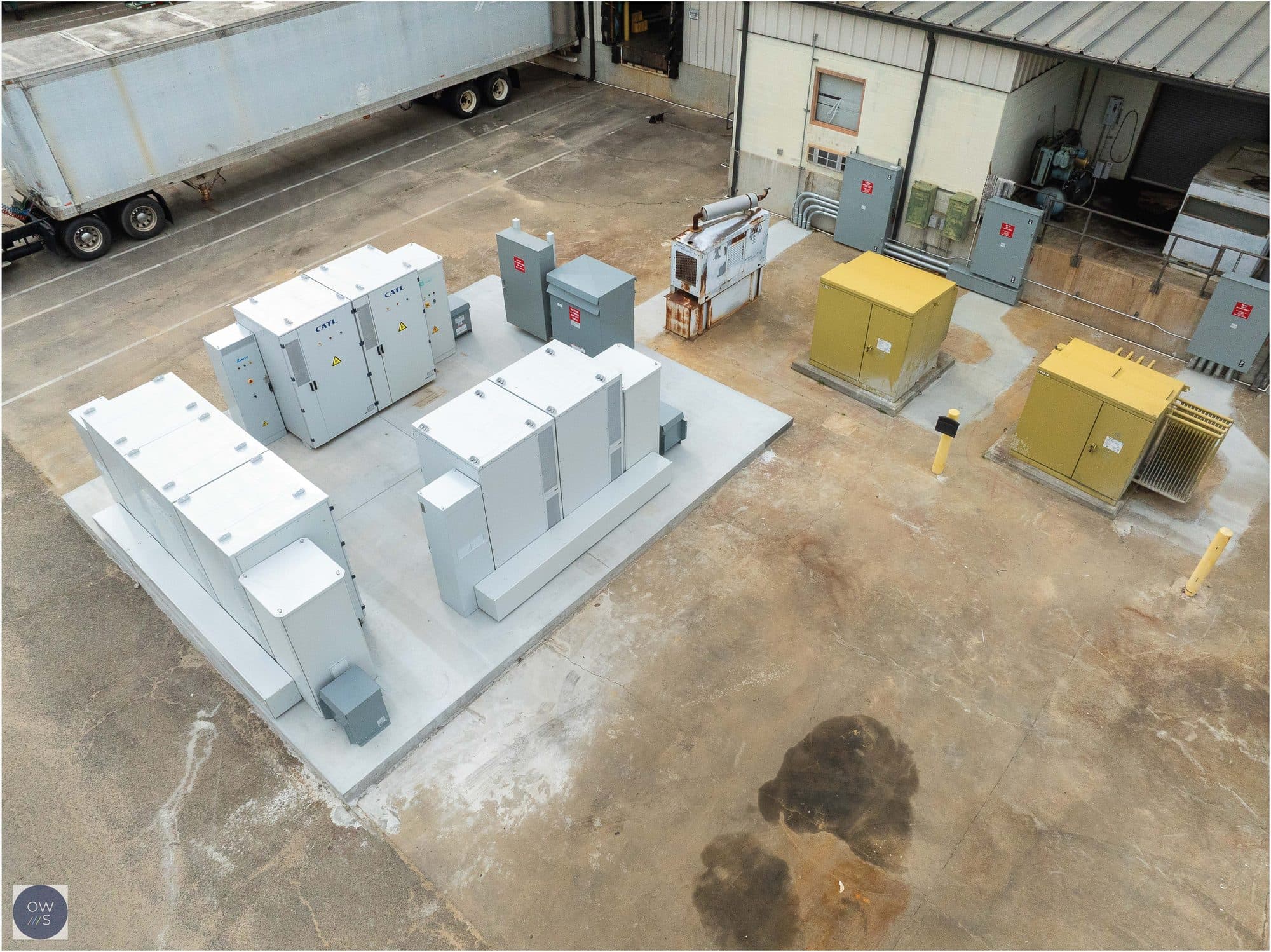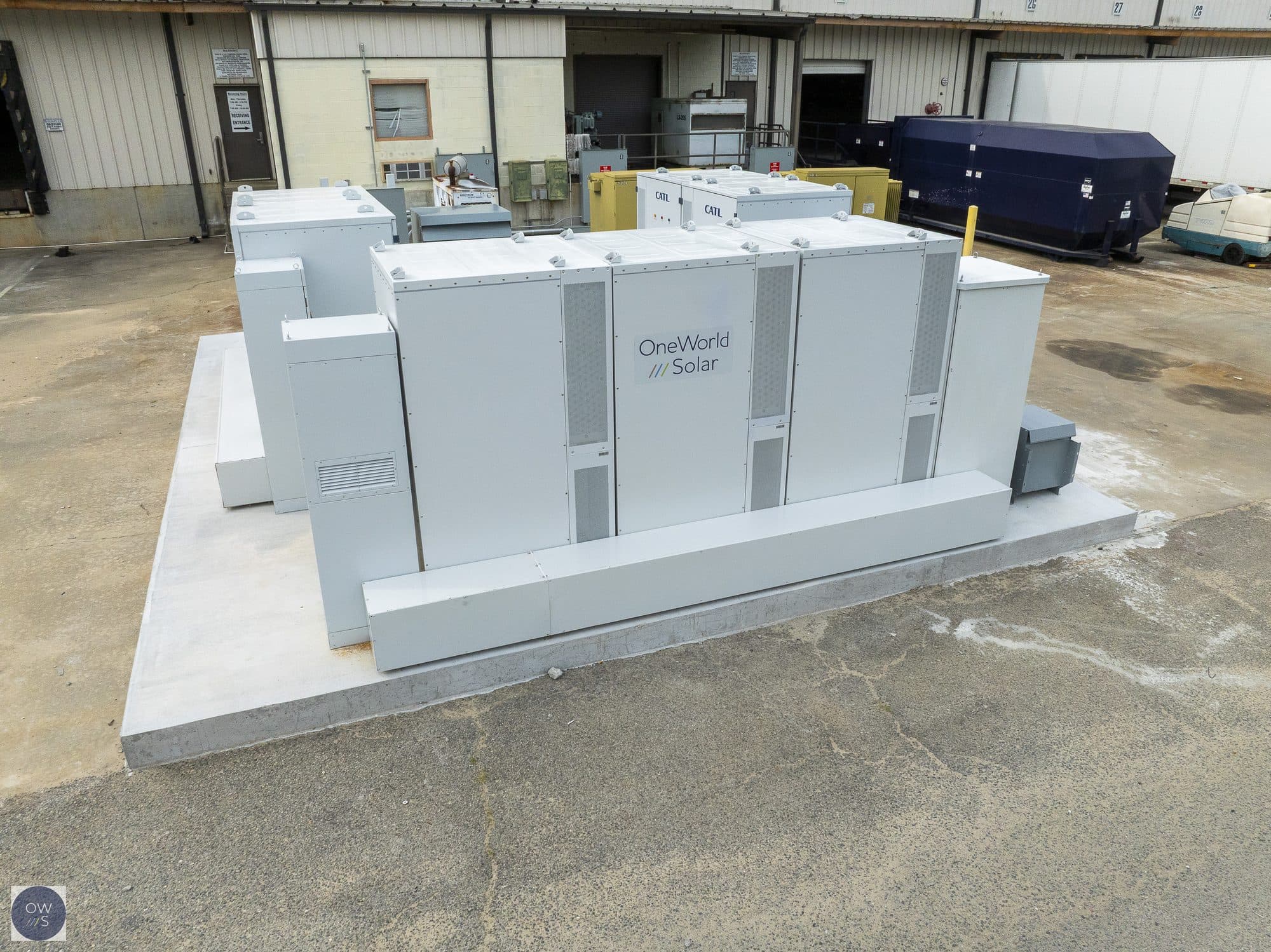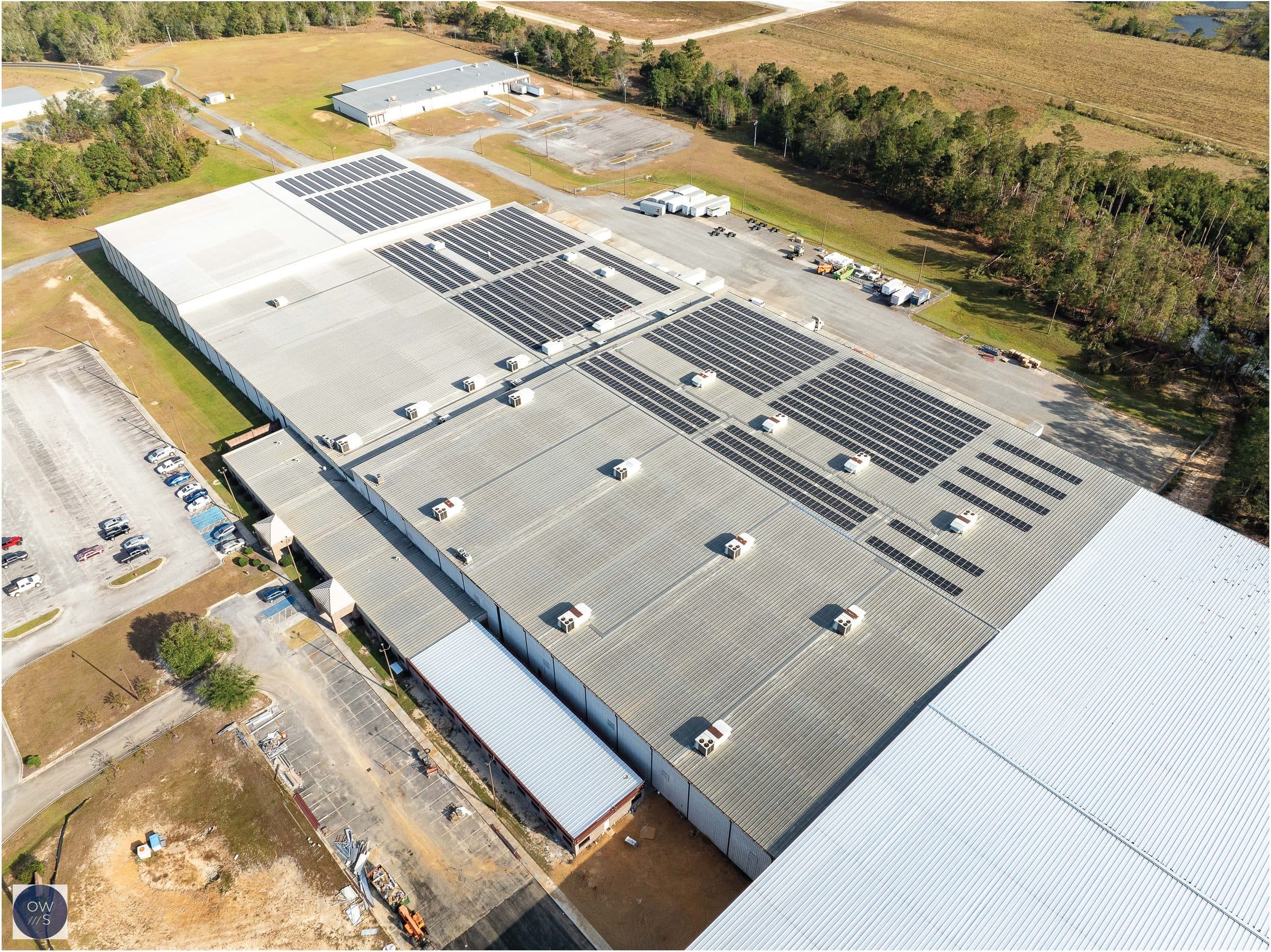
The 1 MW solar installation at the Samsonite and TUMI distribution center in Vidalia, Georgia is the largest single system OneWorld Solar has built: 1.267 MW of rooftop photovoltaics across the facility's roof, paired with 55,000 lb of battery storage in BatteryCube® cabinets using CATL cells.
It is also the clearest example of why we treat solar and storage as one design problem rather than two products. The array works on the energy side of the utility bill. The battery works on the demand side. Sizing either one without looking at the other leaves money on the table.
The problem
A distribution center of this size runs a large, steady daytime load — lighting, conditioning, dock equipment, conveyors and compressed air — with a demand profile that the utility bills separately from consumption. Two things followed from that:
- The roof was a very large asset doing nothing. Distribution centers have the one thing megawatt-scale rooftop solar needs and almost no other commercial building has: acres of uninterrupted, structurally sound roof in a single plane.
- Reducing kilowatt-hours alone would not fix the bill. As our own financial projections disclaimer puts it plainly, a utility may set a customer's peak demand at a time when solar is not effective — early morning, late afternoon, or during a run of cloudy days. Solar cuts overall usage; it cannot be expected on its own to mitigate peak demand.
The solution
1.267 MW
Rooftop photovoltaic array
Across the distribution center roof.
55,000 lb
Of battery storage
BatteryCube cabinets, CATL cells.
One contract
Full EPC scope
Engineering, procurement, construction, interconnection.
OneWorld Solar delivered the project as a single commercial solar EPC contract: structural and electrical engineering, stamped drawings, the utility interconnection package, procurement, construction, and commissioning.
Rooftop array
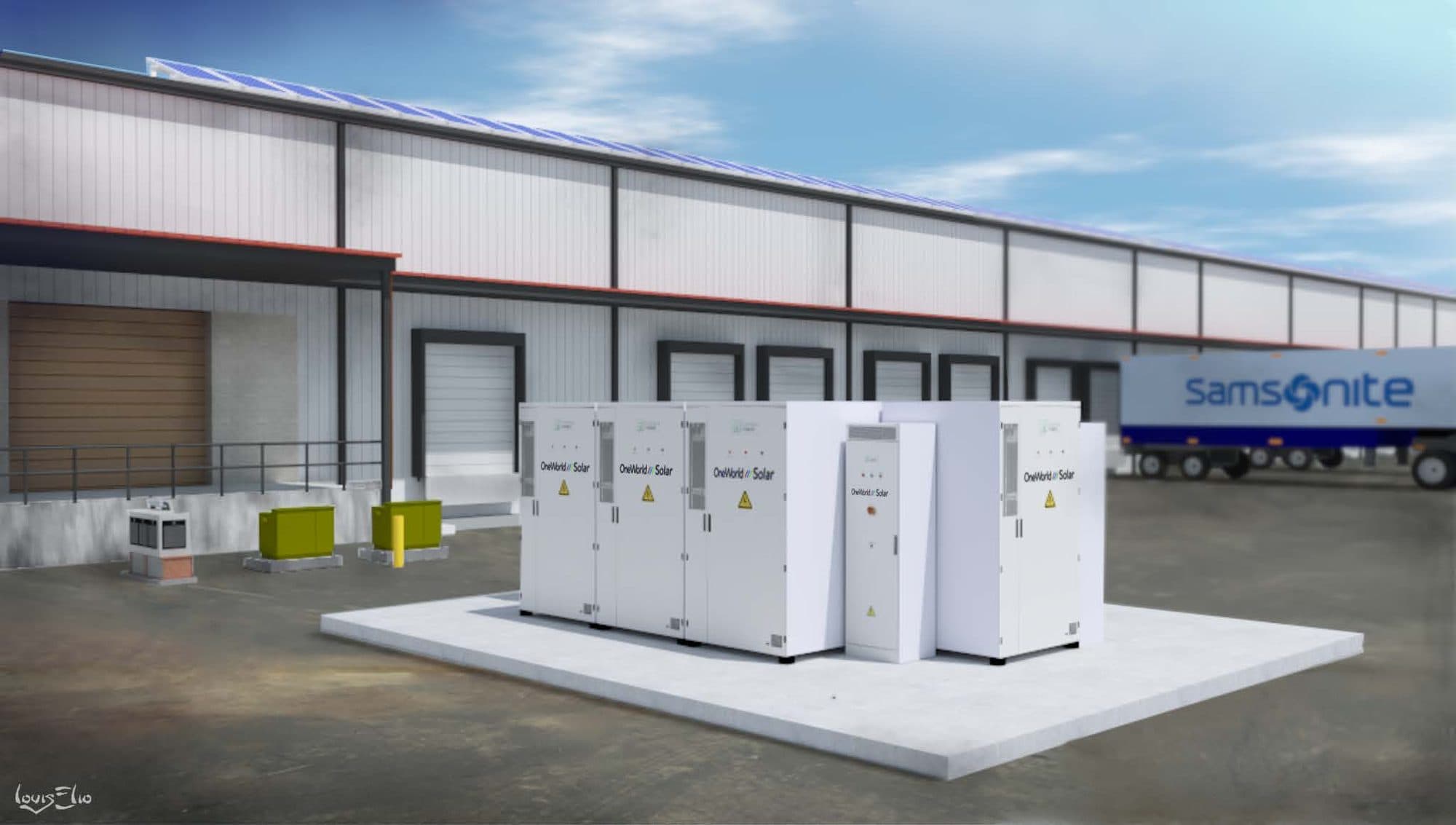
The array was laid out to work around the realities of an operating roof — existing rooftop mechanical units, drainage, fire access pathways and the building's structural capacity. The concept rendering issued before construction shows the planned layout; the finished aerial photograph shows how closely it was followed.
BatteryCube storage
The storage sits outdoors on a concrete pad alongside the existing utility transformers, in BatteryCube® cabinets built around CATL cells. Putting the cabinets outside on the load side of the service keeps the battery out of the building's fire-rated envelope and keeps the interconnection short, which matters more on a large system than most people expect: every foot of heavy AC conductor between the storage and the point of interconnection is cost and loss.
Why the battery is not just a bigger array
It is tempting to treat storage as extra solar. It is not. A battery sized to shave a demand peak is usually far smaller than a battery sized to carry a facility through a night, and the two have completely different cost cases. We size storage from the customer's actual interval data, not from the array size. Read more in when commercial battery storage pays off.
The results
OneWorld Solar has not published production or bill-savings figures for this installation. The scope described above is what the company confirms; anything beyond it should come from OneWorld Solar directly.
What can be stated without qualification is the scope: 1.267 MW of rooftop generation and 55,000 lb of battery storage, engineered, procured, built, interconnected and commissioned by one contractor.
Why this project matters for other facilities
If you operate a distribution center, a manufacturing plant or a warehouse in the Southeast, this project is the closest reference point we have. The roof is the asset, the demand charge is usually the problem, and the two need to be solved together.
- See how the same approach applies across solar for manufacturing facilities.
- Understand the demand-charge mechanics in commercial battery storage installation.
- Check what the federal 30% commercial solar tax credit and Section 179 depreciation do to the net cost.
- Or start from your own bill with the commercial solar savings calculator.
This system was built in Georgia, where OneWorld Solar is headquartered — 609 Church Street, Vidalia, about as local to this site as a contractor gets.