If you run broiler or breeder houses, solar panels for poultry farms are one of the few capital purchases that pay you back out of a cost you already carry every month. Poultry houses are close to the ideal commercial solar building: long uninterrupted metal roofs with almost nothing to shade them, a heavy daytime electrical load, and a rural address that opens the door to federal grant funding most businesses cannot touch.
OneWorld Solar has installed over 4.8 MW on U.S. poultry houses, and more than 2.5 MW across agriculture generally. We are headquartered in Vidalia, Georgia, in the middle of poultry country, and we build the whole job under one contract: engineering, the utility interconnection, construction and commissioning.
Why do poultry houses suit solar so well?
Four things line up on a poultry farm that rarely line up elsewhere.
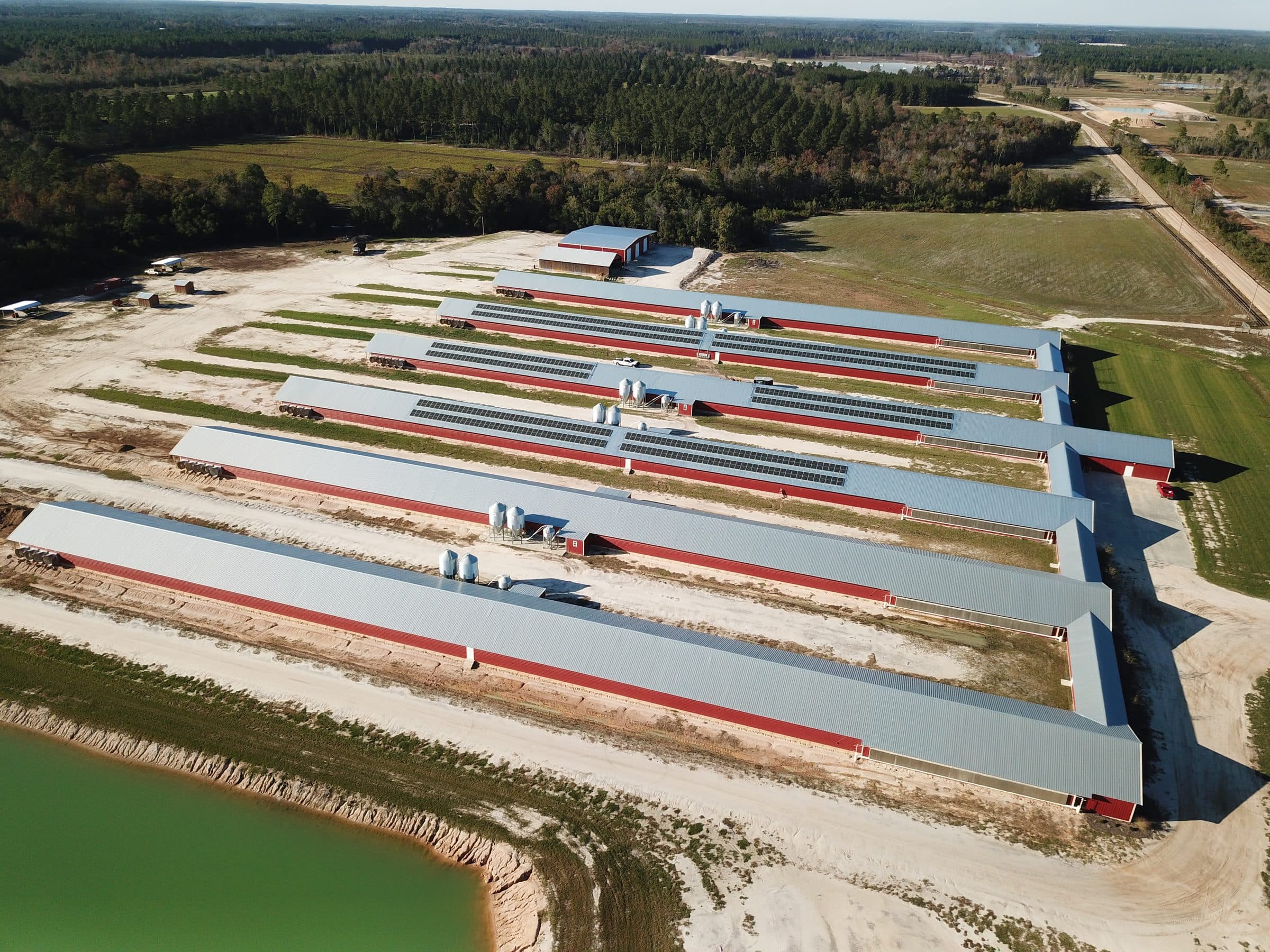
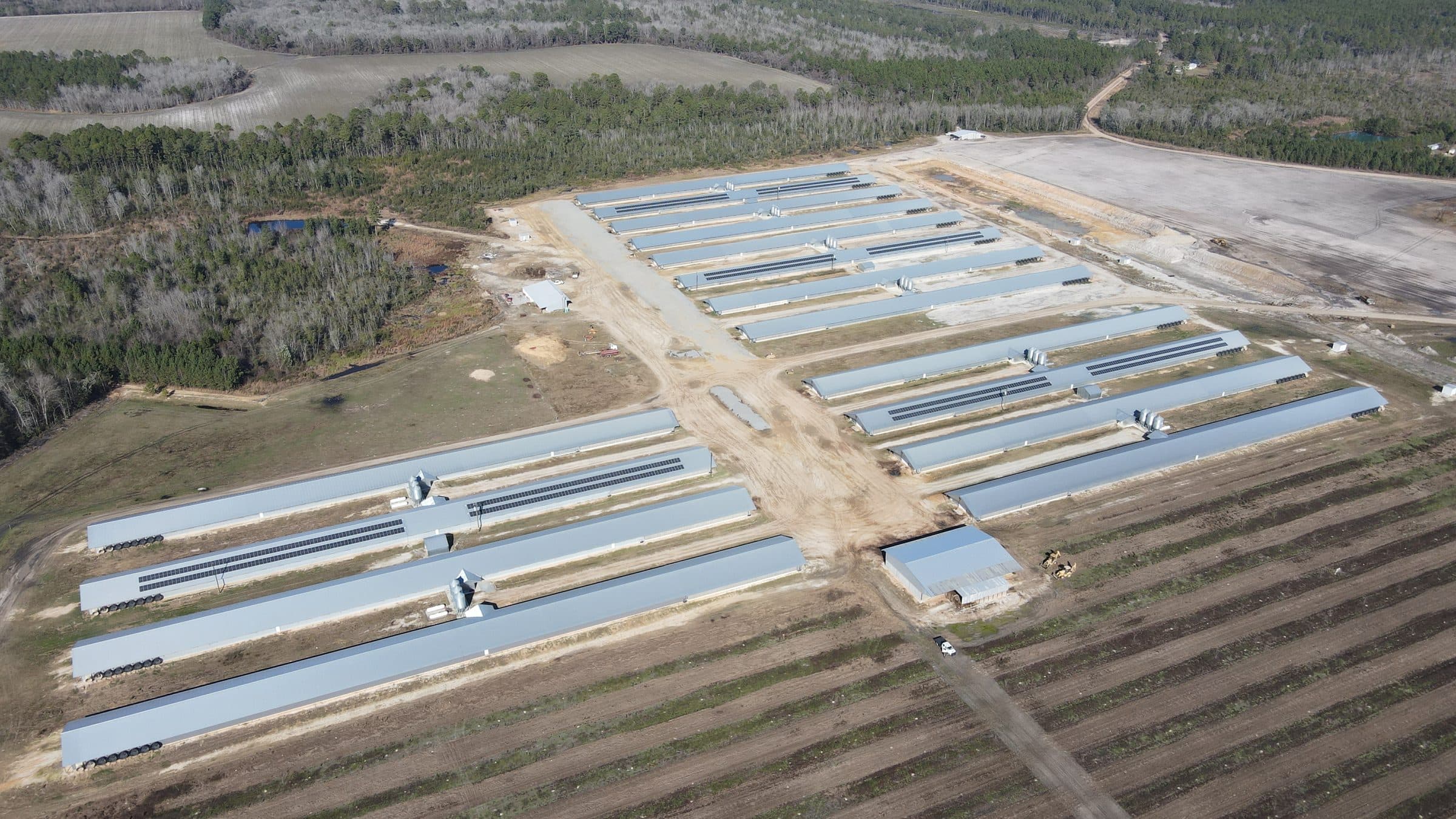
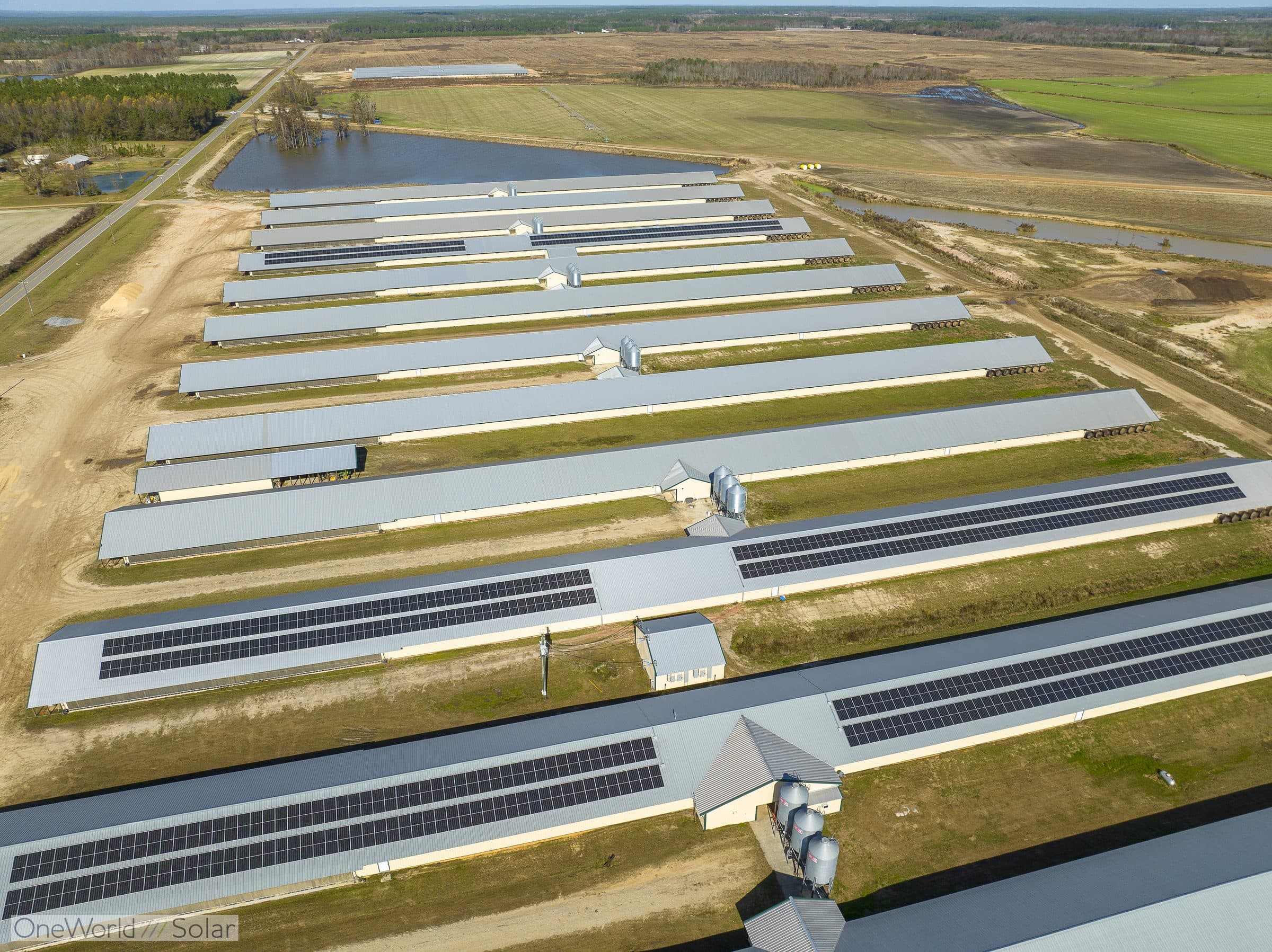
- The roofs are made for it. A house is a long, simple, unbroken metal plane with no rooftop units, no skylights and no parapets. Racking goes down fast, and our patented racking was developed on exactly this kind of structure.
- Your biggest load happens in daylight. Tunnel fans, stir fans and cool cells run hardest on hot afternoons, which is precisely when the array produces most. That means a high share of what you generate is consumed on site rather than exported, and self-consumed power is worth full retail to you.
- Well pumps and cool-cell pumps add to it. Water moves during the day too.
- Brooding heat is the exception. It is usually propane rather than electric, and it peaks in the dark and the cold. Solar does not touch it, and we will say so on the proposal.
How many kilowatts does a poultry farm need?
House count drives system size more than anything else. Three of our installed systems show the pattern:
- 210 kW on a 6-house breeder farm. Breeder houses run lighter ventilation loads but longer lighting hours.
- 450 kW on a 14-house broiler farm. See the 450 kW 14-house broiler solar project.
- 410 kW on a 16-house broiler farm. Older, smaller houses with less fan capacity per house, so a lower per-house figure than the 14-house farm.
Across those three, sizing lands somewhere around 25 kW to 35 kW per house, but do not size from that number. Two farms with the same house count can differ by a third depending on tunnel fan horsepower, whether you run LED or incandescent lighting, how many wells you pump and how many flocks you place a year. We size from twelve months of bills.
Roof mount or ground mount?
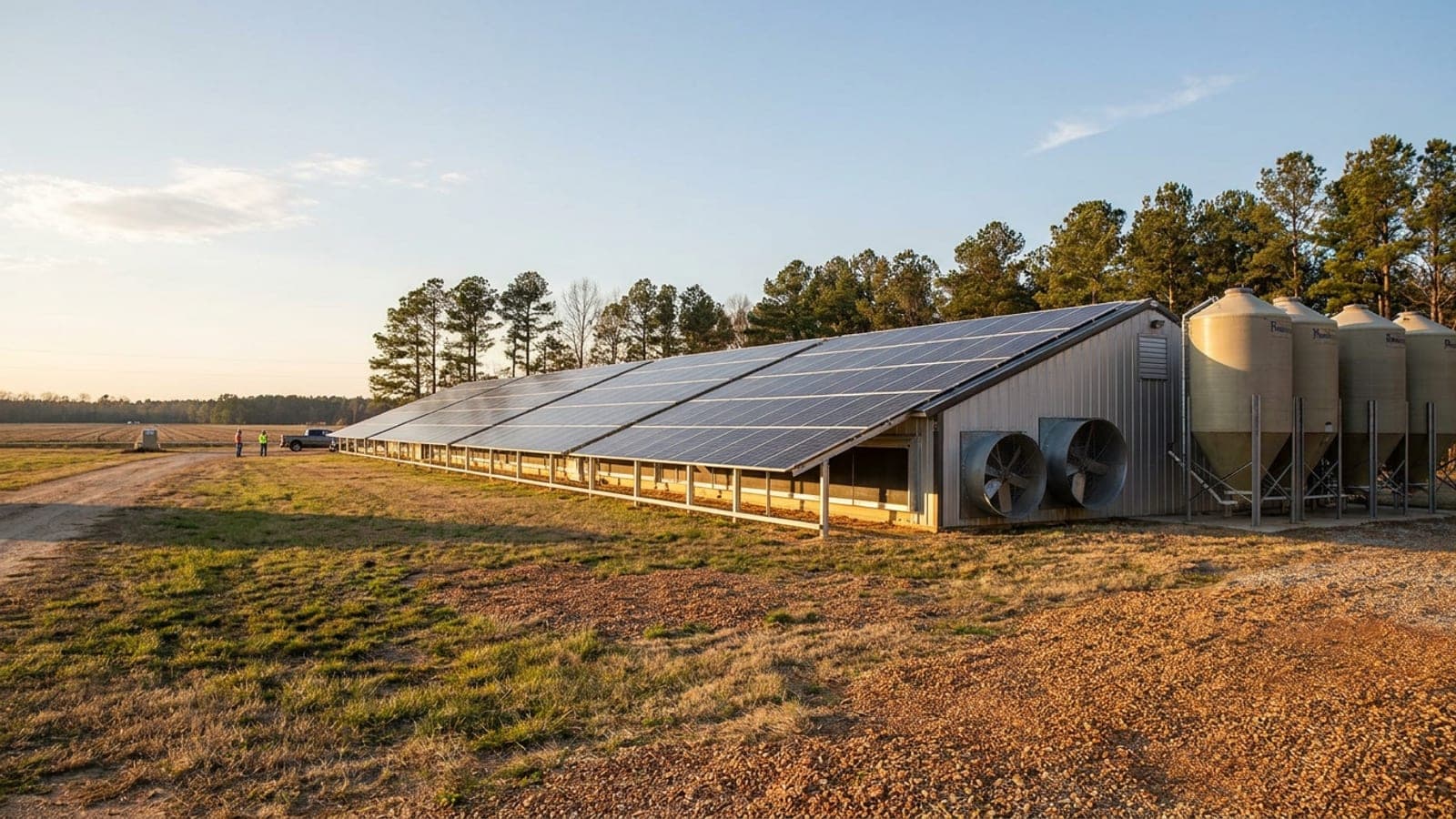
Both, and the answer is usually about the roof rather than the panels. Roof mounting keeps the array over the load, costs nothing in land and needs no site work. It only makes sense if the remaining roof life is comparable to the array life. If your houses are due for re-roofing inside the next decade, you are choosing to pay for a removal and reinstall later.
Ground mounts suit farms with a corner of unusable pasture near the service entrance, older roofs, or purlin spacing that will not carry the load without reinforcement. A ground mount also lets us orient the array properly rather than accept the house's heading. We price solar panels for poultry farms both ways when the roofs are marginal, and we assess both during the feasibility stage of our commercial solar EPC contract.
Which incentives apply to a poultry farm?
This is the part that changes the math for a grower, and it is worth more attention than the equipment.
The USDA Rural Energy for America Program is the single biggest lever available to a rural poultry operation. It is a competitive grant for agricultural producers and rural small businesses, and it can cover a substantial share of project cost, with the rest often carried by a guaranteed loan. Awards are scored, so no contractor can promise you one, but poultry farms score well because the energy use is documented and the site is unambiguously rural. The full application process is set out on our USDA REAP grant for solar page.
On top of that, the 30% federal investment tax credit, Section 179 and bonus depreciation all apply to a farm the same way they apply to any other business. Your accountant validates what you can actually claim; we supply the evidence package.
What about ventilation, outages and batteries?
Ventilation is the load that keeps growers awake. A summer outage in a closed-house operation is measured in minutes before you have a serious problem, which is why most farms already run generators.
Solar alone does not solve that, because a grid-tied inverter shuts down when the grid goes down. What does solve it is a commercial micro-grid that can island the farm, or battery storage sized to carry tunnel fans and controllers through an outage. On a farm with an aging generator, comparing the cost of replacing it against a battery that also shaves your daily peaks is a conversation worth having before you buy another diesel.
What solar will not do on a poultry farm
Solar will not cover night-time brooding heat, and it will not meaningfully change your propane bill. It offsets electricity, mostly ventilation, lighting and pumping, and it does that during daylight. Any proposal that shows a farm going to a near-zero power bill year round has either oversized the array or ignored your winter placement schedule.
What have we actually built?
4.8+ MW
Installed on U.S. poultry houses
Breeder and broiler farms across the Southeast.
450 kW
14-house broiler farm
Our largest single poultry site to date.
210 kW
6-house breeder farm
Roof mounted across all six houses.
The 210 kW 6-house breeder solar installation is the clearest example of what a smaller operation gets, and it sits alongside the rest of our commercial solar work by industry. For real numbers behind the arrays, including what drives poultry farm solar cost and results, start there and then run your own bill through the commercial solar savings calculator.
Most of this work sits in commercial solar installation across Georgia, though we build for growers throughout the Southeast. Send twelve months of bills and your house count, and we will tell you plainly whether solar panels for poultry farms make sense on your site or whether they do not.