Skip to content
OneWorld Solar
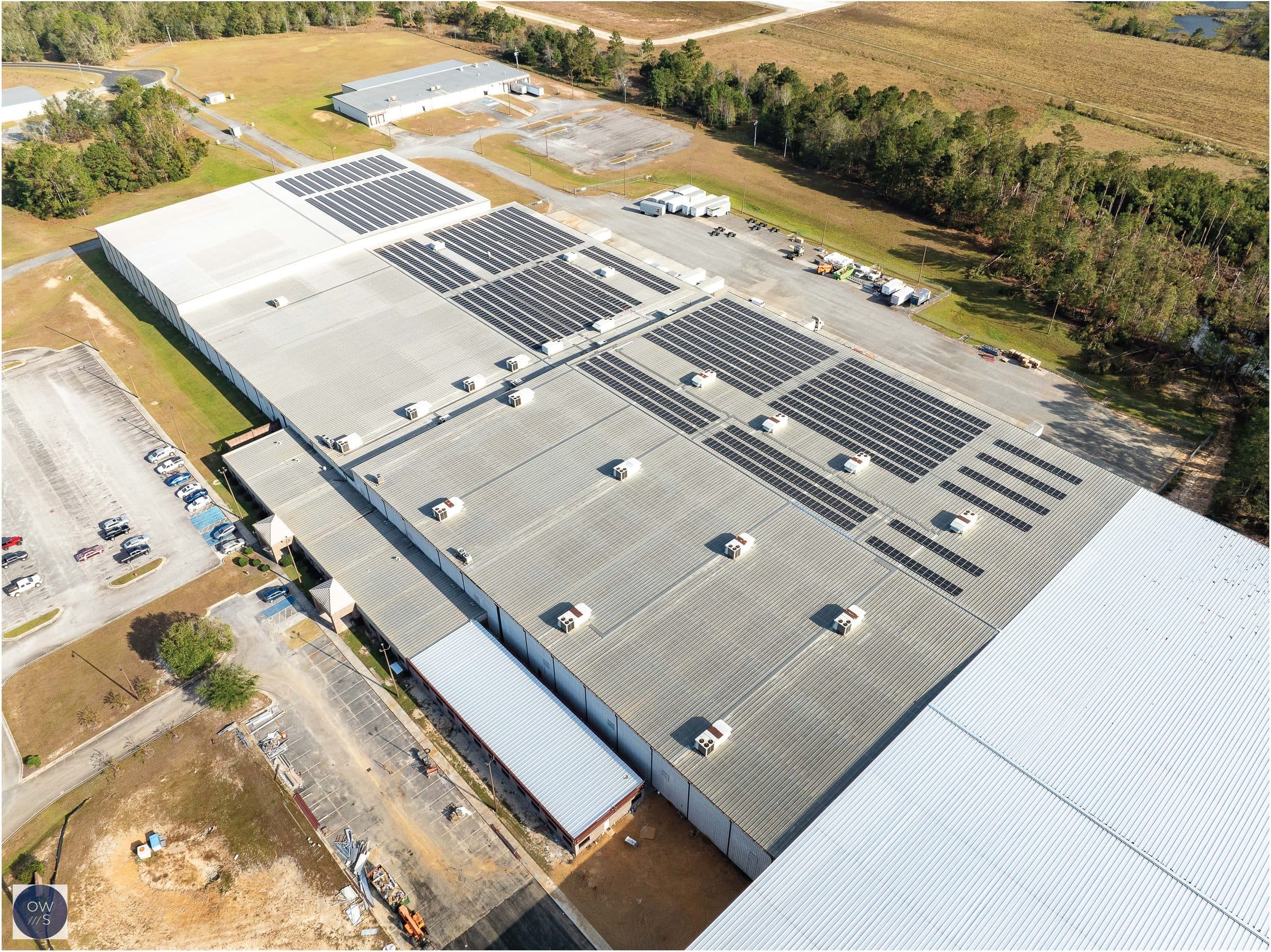
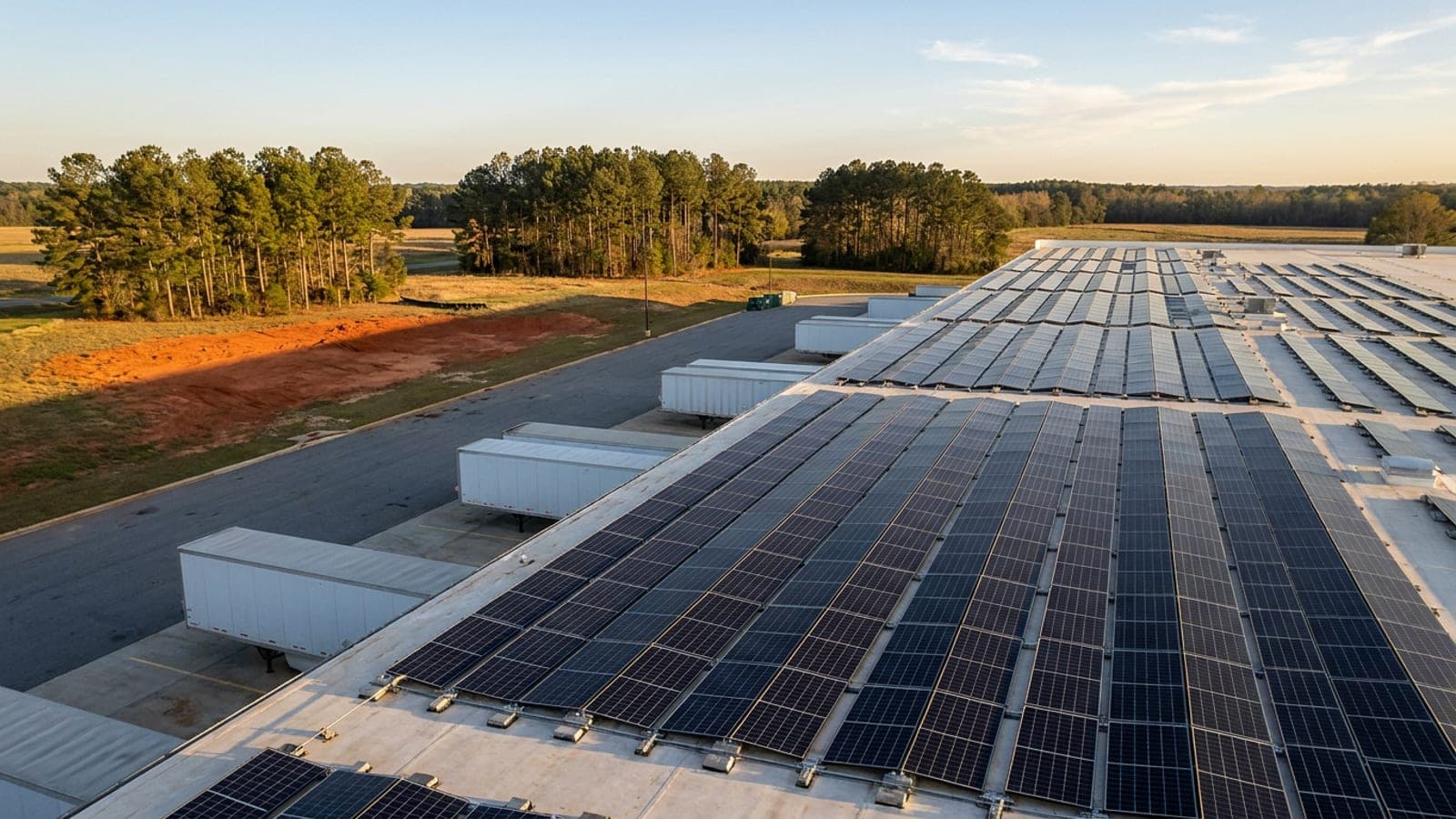
1.267 MW commercial solar installation on the Samsonite and TUMI distribution center roof in Vidalia, Georgia

Serving Georgia

Commercial Solar Installation Georgia Businesses Can Bank On

Georgia is three electricity markets, not one. We design commercial solar around the utility that actually serves your meter — Georgia Power, an EMC or a municipal system — from our home office in Vidalia.
Reviewed by Chris Sandifer, PE
  • Headquartered at 609 Church Street, Vidalia — south Georgia, not a satellite office
  • Designs built around Georgia Power, EMC and municipal rules, which are not the same
  • 1.267 MW Samsonite / TUMI rooftop and battery project built in our home town
  • 4.8+ MW installed on Georgia and Southeast poultry houses, much of it REAP-supported

Electricity in Georgia is sold by three very different kinds of utility, and which one serves your meter changes the economics of solar more than the brand of module on your roof ever will. What makes a commercial solar installation Georgia businesses can bank on is not the hardware. It is designing the array around the rate schedule, the interconnection rules and the incentive stack that actually apply at your service address.

OneWorld Solar is headquartered at 609 Church Street in Vidalia, in the middle of south Georgia's poultry and agriculture belt. The company was founded in 2001, which makes it the oldest solar company in the Southeast. Doug Baird acquired it in October 2017 and rebuilt it around large commercial and agricultural customers; since then we have installed more than 7.8 MW. Our largest single array — 1.267 MW of rooftop solar with 55,000 lb of battery storage at the Samsonite and TUMI distribution center — is in the same town as our office.

Who sells you power in Georgia, and why does it matter?

Three answers, three different projects.

Georgia Power is the investor-owned utility, regulated by the Georgia Public Service Commission. Its commercial customers sit on published rate schedules, and the Commission approves those schedules, the interconnection tariff and the company's long-range resource plans in public dockets. That is genuinely useful to you: the rules are written down and you can read them. Customers on Georgia Power's commercial rate schedules typically pay a meaningful share of their bill as demand charges, so the design question is not only how much energy the array makes but when it makes it against your peak.

Electric Membership Corporations serve most of rural Georgia. There are dozens of them, they are member-owned cooperatives run by elected boards, and they buy most of their wholesale power through Oglethorpe Power. Each one sets its own interconnection policy, system size limits and buyback arrangement. Two poultry farms ten miles apart on different EMCs can get different answers to the same question. We read the specific co-op's current policy for every job rather than assuming.

Municipal utilities — cities that own their distribution system and buy wholesale power through the Municipal Electric Authority of Georgia — are the third case. Their interconnection and buyback terms are set locally, and long-term wholesale supply contracts can shape how a city treats behind-the-meter generation. Verify current terms with the city before you sign anything.

Why we ask for twelve months of bills first

The rate schedule code printed on your bill tells us more than a satellite image of your roof does. Demand charges, ratchet clauses, power factor penalties and time-of-use windows decide whether solar alone, solar plus commercial battery storage, or power factor correction first is the right investment. On some Georgia tariffs, a smaller array plus storage beats a bigger array on its own.

Which incentives apply to commercial solar in Georgia?

The federal stack does the heavy lifting here. The 30% federal solar investment tax credit and Section 179 and bonus depreciation apply to Georgia businesses the same way they apply anywhere in the US, and for rural and agricultural sites the USDA REAP grant can cover a substantial share of project cost.

At the state level, Georgia has historically offered no broad statewide commercial solar tax credit comparable to the federal ITC, and utility-run rebate or program capacity is limited and periodically re-opened rather than permanently available. Treat any state or utility program as something to verify in writing this quarter, not something to assume. We will never model a savings number on an incentive we have not confirmed is open.

Why does south Georgia poultry come up so often?

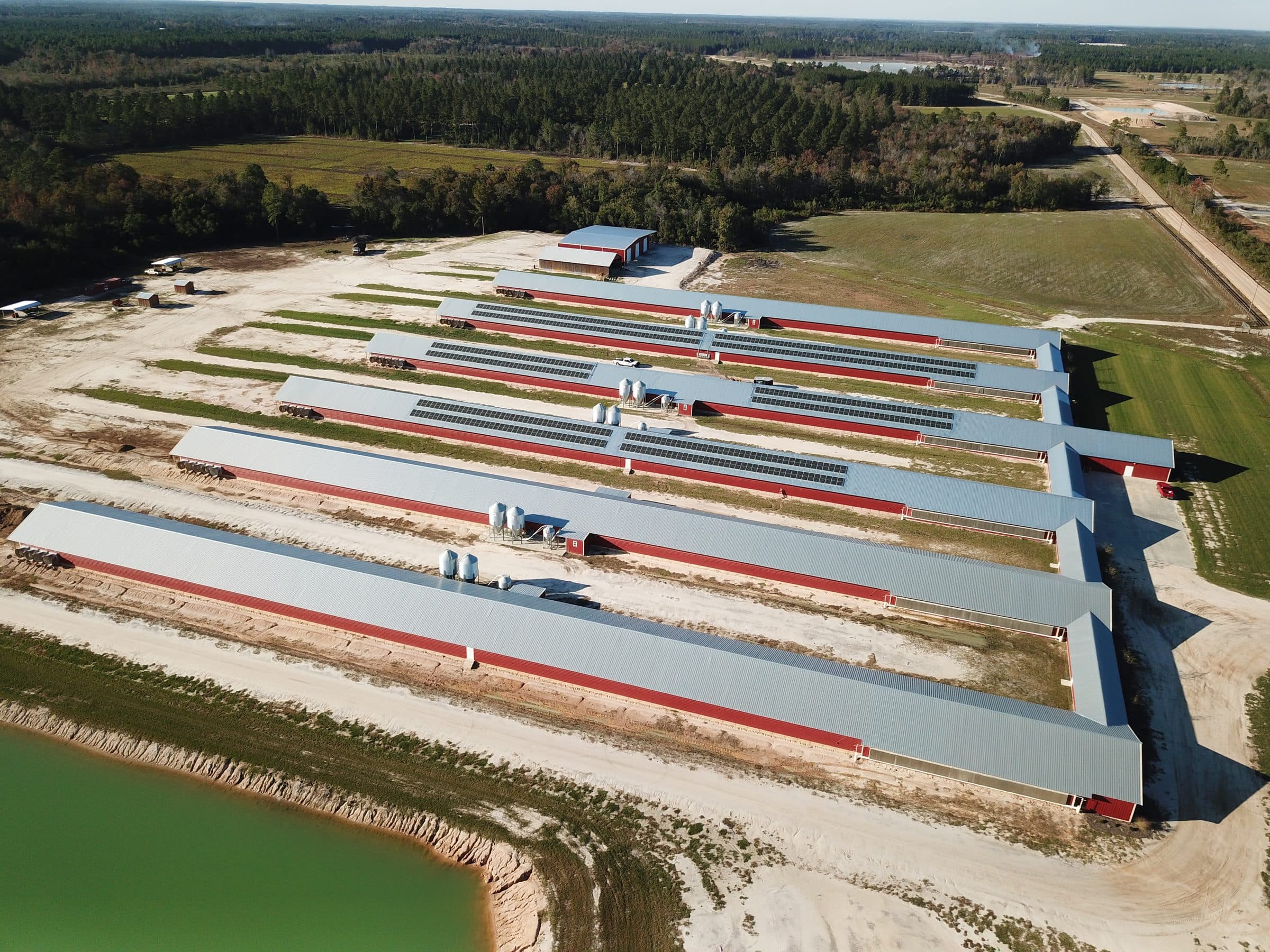
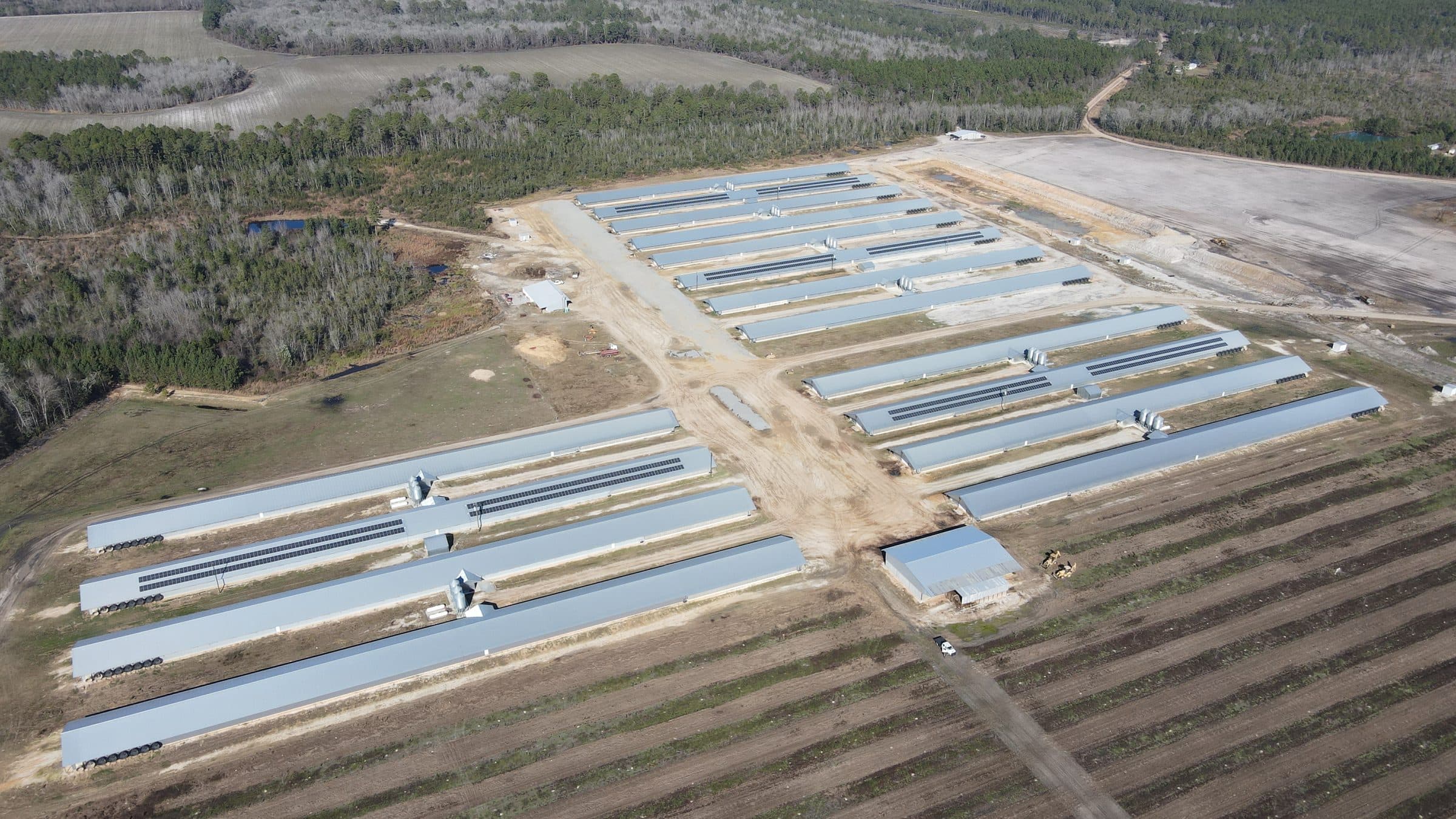
Because the load profile fits. Broiler and breeder houses run tunnel ventilation, lighting and heating hard, year-round, on rural three-phase service — and they sit on land with clear southern exposure. They are also usually eligible rural small businesses or agricultural producers for REAP purposes. We have installed more than 4.8 MW on US poultry operations, including named systems at 210 kW on a six-house breeder farm, 450 kW on a 14-house broiler farm and 410 kW on a 16-house broiler farm. A commercial solar installation Georgia growers can finance usually comes down to how well the REAP application was put together, so we build that package as part of the job. If you run houses, start with solar panels for poultry farms.
What has OneWorld Solar actually built in Georgia?

1.267 MW

Samsonite / TUMI, Vidalia

Rooftop solar plus 55,000 lb of BatteryCube® storage using CATL cells.

1 MW+

Woody Folsom Automotive

Chevrolet, Ford and Chrysler Dodge dealerships.

$1,800/mo

Swainsboro Supply Company

Power bill savings on a 117 kW ground mount.

Beyond those: 1.2 MW of ground mount across four Georgia Power facilities, the Swainsboro Supply 117 kW ground mount solar case study, 23 kW on the roof of the Homewood Suites by Hilton in Savannah, a 15 kW laminate canopy at the Southface Eco Office in Atlanta, 200 kW pole top at the Dr. Sidney Smith farm near Savannah, and 25 kW at Sweetwater Creek State Park. The Samsonite and TUMI 1.267 MW rooftop solar and battery case study is the one to read if you run a distribution center or plant; the Woody Folsom 1 MW dealership solar case study is the one to read if you sell cars.

Working for Georgia Power on its own facilities is worth a sentence on its own. Utilities are the hardest customers to satisfy on documentation, workmanship and interconnection compliance, and they do not hand that work to contractors who improvise.

Who does the engineering and permitting?

Chris Sandifer, our VP of Engineering, is a Professional Engineer licensed in Georgia, South Carolina, North Carolina, Florida, Virginia and Texas, a NABCEP board-certified Photovoltaic System Inspector, and has worked on medium- and high-voltage interconnections of utility-scale renewable generators since 1992. Drawings are sealed in-house, so the engineer who stamped the set is the one who answers the utility's review comments — not a subcontractor three states away.

The rest of the scope is described on our commercial solar EPC contractor page: feasibility, engineering, procurement, construction, interconnection and commissioning under one contract. Related work in manufacturing and warehousing and at car dealerships follows the same process.

What is the next step?

We handle commercial solar installation Georgia wide — Atlanta metro to the coast, Georgia Power territory to the smallest EMC. Send twelve months of bills and the service address. We will identify the utility and rate schedule, tell you honestly whether your site is a good candidate, and put a number on it. For ranges before you talk to anyone, read how much commercial solar costs per kW in Georgia. Run your own first pass with the commercial solar savings calculator, or talk to our Vidalia office about a site walk.
Reviewed by Chris Sandifer, PE

Local proof

Commercial solar projects in Georgia

  • Aerial view of the 1.267 MW rooftop solar array OneWorld Solar installed on the Samsonite and TUMI distribution center in Vidalia, Georgia1.267 MW

    Manufacturing & Warehousing · Vidalia, Georgia

    Samsonite / TUMI Luggage

    The largest single installation OneWorld Solar has built: 1.267 MW of rooftop solar over a working distribution center, paired with 55,000 lb of BatteryCube® storage using CATL cells.

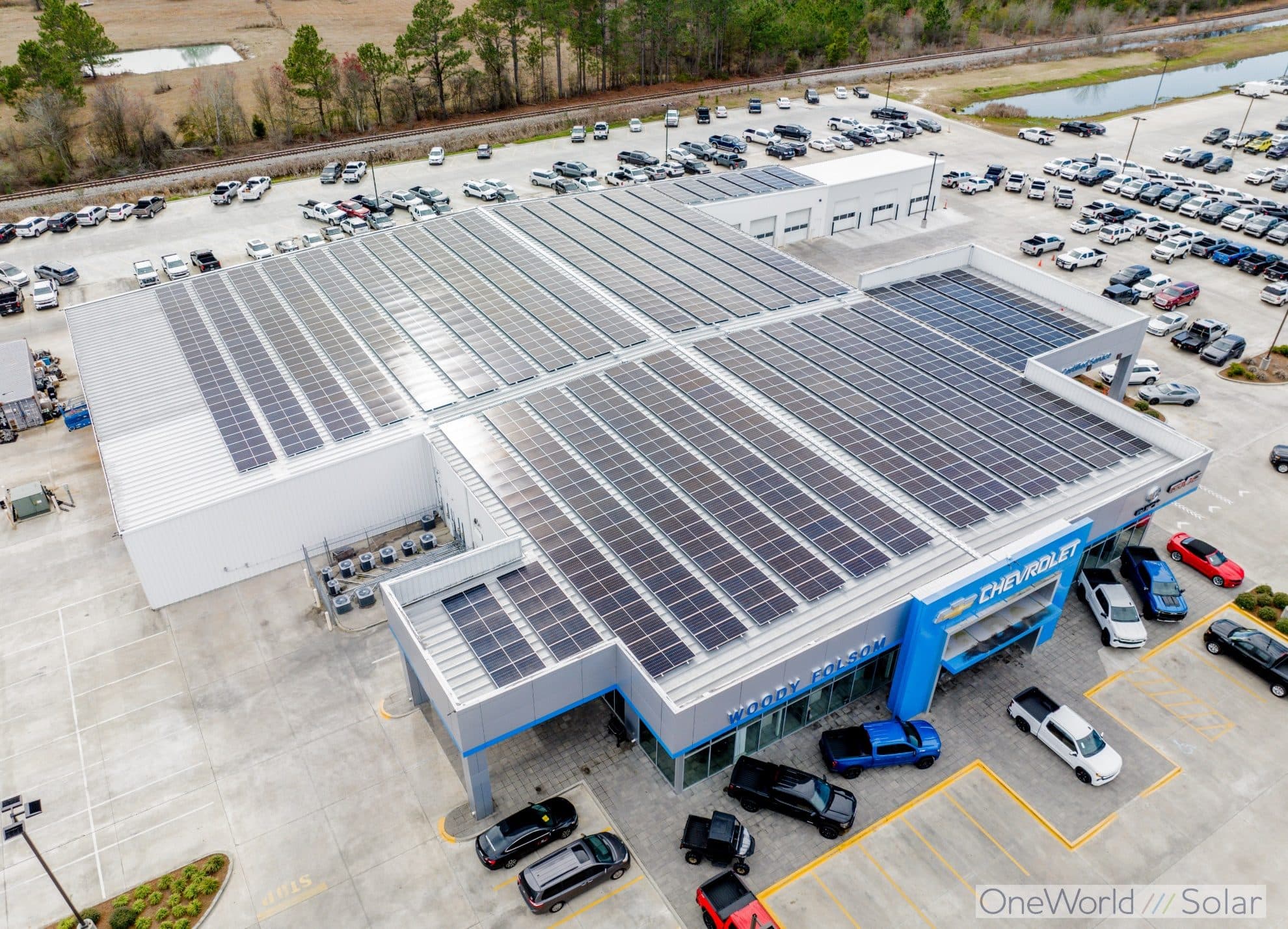
  • Rooftop solar array installed by OneWorld Solar on the Woody Folsom Chevrolet dealership in Georgia, seen from above1 MW+

    Car Dealerships · Baxley and Vidalia, Georgia

    Woody Folsom Automotive Group

    More than 1 MW of rooftop solar across the Woody Folsom Chevrolet, Ford and Chrysler Dodge dealerships in Georgia — three roofs run as a single engineering and construction program.

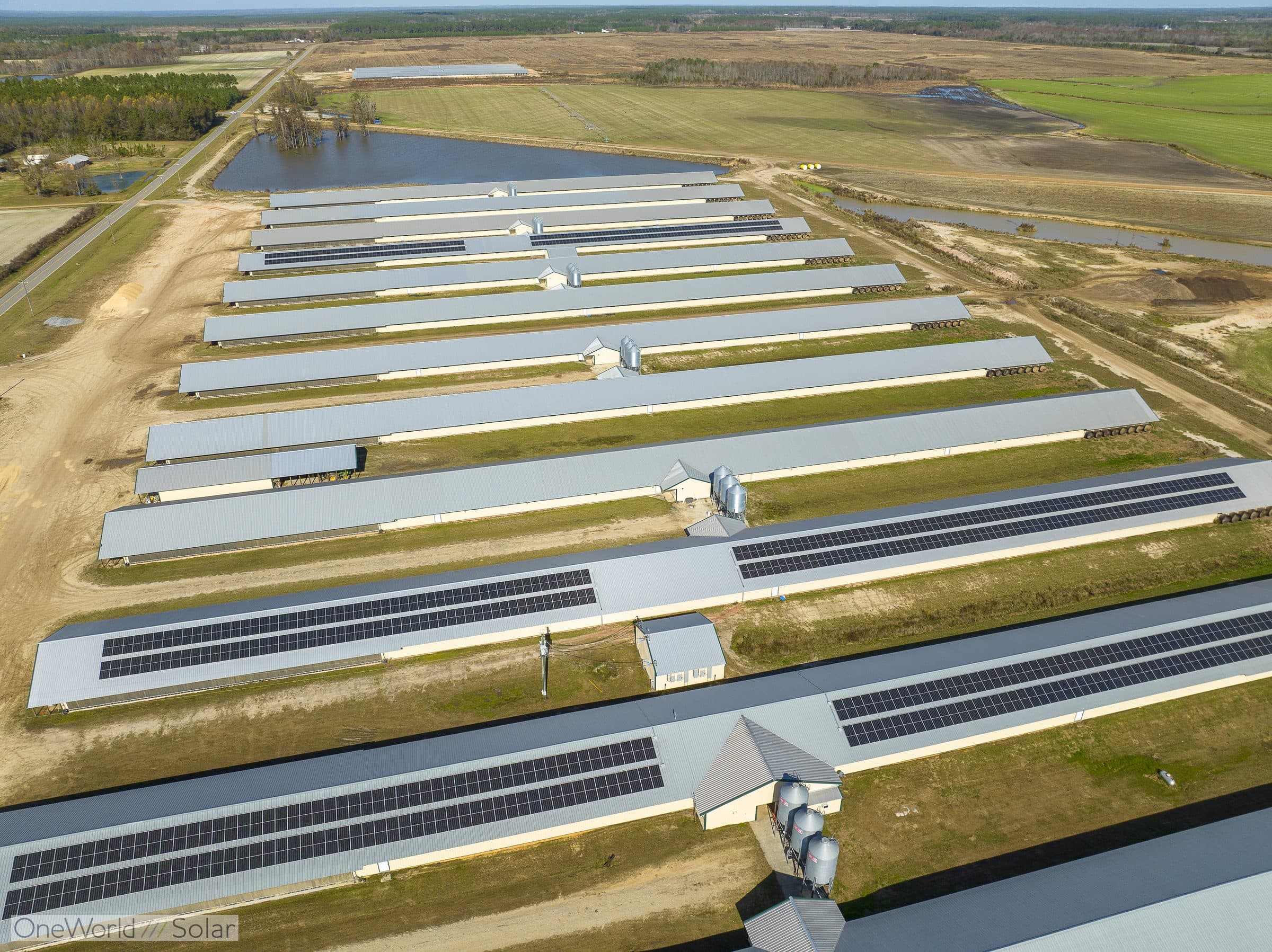
  • Aerial view of the 450 kW rooftop solar array OneWorld Solar installed across a 14-house broiler poultry farm in southeast Georgia450 kW

    Poultry & Agriculture · Southeast Georgia

    14-house broiler farm

    The largest poultry site OneWorld Solar has built to date: 450 kW of rooftop solar spread across all 14 houses on a southeast Georgia broiler farm, delivered under one EPC contract.

  • Aerial view of the 210 kW rooftop solar array OneWorld Solar installed across six poultry breeder houses in southeast Georgia210 kW

    Poultry & Agriculture · Southeast Georgia

    6-house breeder farm

    A 210 kW rooftop array across six breeder houses in southeast Georgia — the densest per-house sizing of the poultry farms we publish, and a different load profile from a broiler operation.

  • 117 kW

    Ground mount solar array

    Manufacturing & Warehousing · Swainsboro, Georgia

    Swainsboro Supply Company

    A 117 kW ground mount array for Swainsboro Supply Company in Swainsboro, Georgia. Its president is on record: nearly no maintenance issues and about $1,800 a month off the power bill.

  • 1.2 MW

    Ground mount solar across four locations

    Utilities & Public Sector · Four sites across Georgia

    Georgia Power

    Ground mount solar totalling 1.2 MW across four Georgia Power locations. Building for the utility itself means being held to the standards the utility applies to everyone else.

  • Aerial view of a 410 kW rooftop solar installation by OneWorld Solar spanning 16 broiler chicken houses on a southeast Georgia poultry farm410 kW

    Poultry & Agriculture · Southeast Georgia

    16-house broiler farm

    A 410 kW rooftop array spread over 16 broiler houses in southeast Georgia — the lowest per-house sizing of the three poultry farms we publish, and a useful lesson in what actually caps an array.

  • 23 kW

    Roof mount solar

    Hotels & Resorts · Savannah, Georgia

    Homewood Suites by Hilton

    A 23 kW roof mount array on a franchised hotel in Savannah: brand standards, franchisor approval, a 24/7 load, and an honest look at where the economics come from at this size.

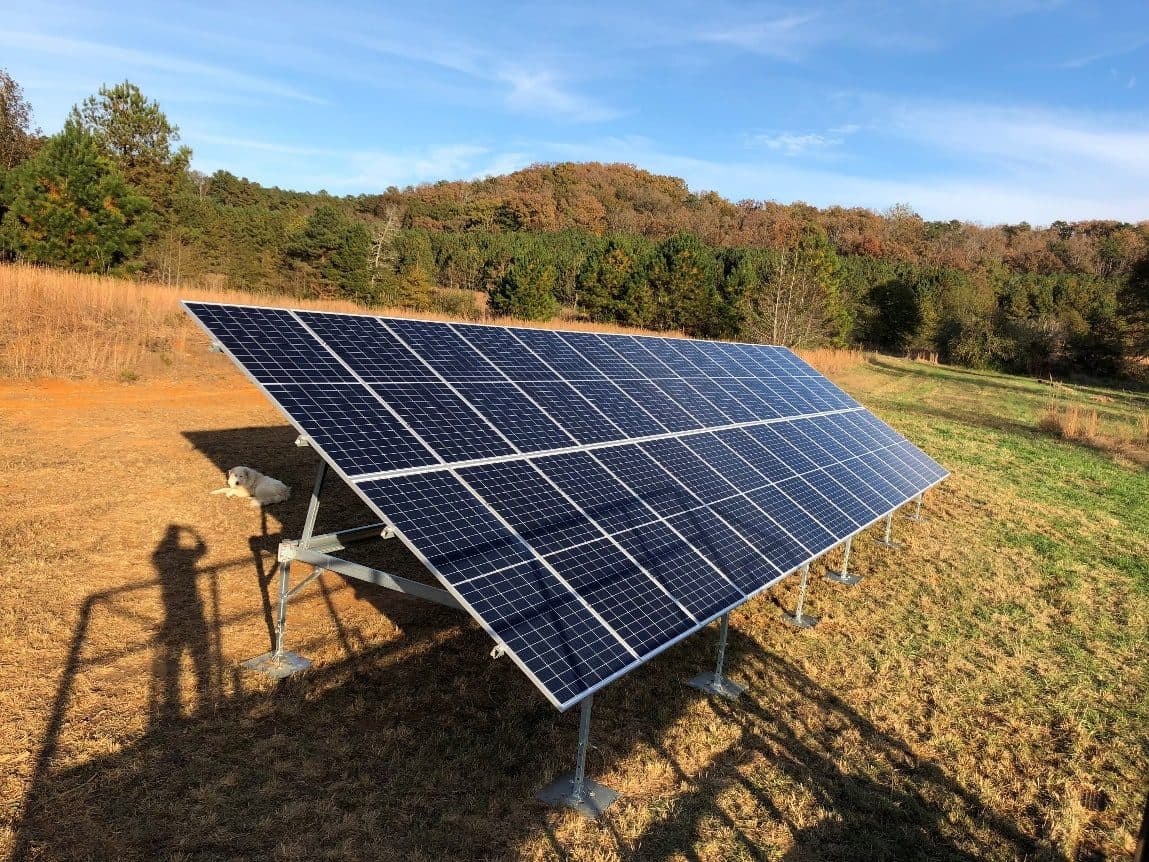
  • The 10 kW ground mount solar array donated by OneWorld Solar to Mike Reynolds and his family10 kW

    Community · Georgia

    Mike Reynolds — donated system

    OneWorld Solar donated a 10 kW ground mount solar array to Mike Reynolds, who was seriously injured in Iraq by an IED, and his family.

commercial solar installation Georgia

Frequently asked questions

Does Georgia have net metering for commercial solar?

Georgia does not have a single statewide net metering rule that applies to every business. What you are credited for exported power depends on whether Georgia Power, an Electric Membership Corporation or a municipal utility serves your meter, and each sets its own terms. Because those terms are revised periodically, we pull your current rate schedule and the utility's current interconnection tariff before we model savings, and we recommend you verify them with the utility too.

Who regulates commercial solar interconnection in Georgia?

The Georgia Public Service Commission regulates Georgia Power, the state's investor-owned utility, and approves its rate schedules and resource plans. Electric Membership Corporations are member-owned cooperatives governed by their own elected boards, and municipal systems answer to their city governments. That is why an interconnection question with a clear answer in Georgia Power territory can have a completely different answer twenty miles away.

Do I need a Professional Engineer stamp for commercial solar in Georgia?

Commercial permit sets in Georgia are generally expected to carry a Professional Engineer seal, and utilities routinely require sealed single-line diagrams with an interconnection application. Requirements vary by authority having jurisdiction, so we confirm with the local building department before design starts. Our VP of Engineering, Chris Sandifer, is a licensed PE in Georgia and seals our drawings in-house rather than subcontracting them.

Can a Georgia poultry farm get a REAP grant for solar?

Poultry operations in rural Georgia are among the strongest candidates for a USDA REAP grant, because they are agricultural producers with high, year-round electrical loads for ventilation, lighting and heating. A grant is applied for and awarded by USDA, never guaranteed by us. We prepare the technical and energy-assessment portions of the application and work with your accountant on the rest.

How long does a commercial solar installation take in Georgia?

Plan on four to nine months from signed contract to energization for a 250 kW to 1 MW array. Engineering, permitting and the utility interconnection study take roughly six to twelve weeks and run in parallel with procurement. The utility queue is usually the longest item in the schedule, which is why we file the interconnection application as soon as the design supports it rather than waiting for construction.

Does OneWorld Solar work outside south Georgia?

Yes. We are based in Vidalia and much of our work is in the southern half of the state, but we have built in Atlanta, Savannah, Swainsboro, Baxley and across the Georgia Power service territory, as well as in Florida, the Carolinas and the Caribbean. Travel distance affects mobilization cost on smaller systems, which we show as a line item rather than burying it in the price per watt.

Related

Keep reading

Find out what solar would do to your power bill

Send us twelve months of utility bills and we will come back with a system size, a cost, the incentives you qualify for and a payback range — at no charge.