
Two quite different technologies get called solar, and the USDA does not much care which one you pick as long as it is a renewable energy system. That leaves the choice to you, and picking the wrong one is an expensive way to learn the difference.
This comes up often enough among USDA solar thermal searches that it is worth setting out plainly: what each technology is good at, which kind of operation each suits, and how to check what a REAP application will actually accept.
The difference, in one paragraph
A solar thermal collector heats a fluid directly with sunlight. You get heat, where the collector is, when the sun is out. A photovoltaic panel turns sunlight into electricity, which you can then use for anything at all — including making heat, less efficiently than a thermal collector would have.
Thermal captures more of the available energy. Photovoltaics captures less of it but produces something far more useful, because electricity moves, stores and does every job on the site rather than one.
That trade is the whole decision.
Which one your operation needs
The test is not about technology preference. It is about which line of your bill is large.
Solar thermal makes sense where you have a substantial, predictable, year-round demand for heat at a modest temperature, and where that demand happens near where you could put collectors. A dairy washing down equipment twice a day is the textbook case. So is a processing operation with steady hot water draw, or a facility heating a large volume of water for a purpose that runs regardless of season.
Photovoltaics makes sense where your cost is electrical. Ventilation, lighting, refrigeration, motors, compressors, controls. It also makes sense where your demand is variable or seasonal, because electricity can be exported or offset against consumption rather than wasted.
Why most agricultural REAP projects end up photovoltaic
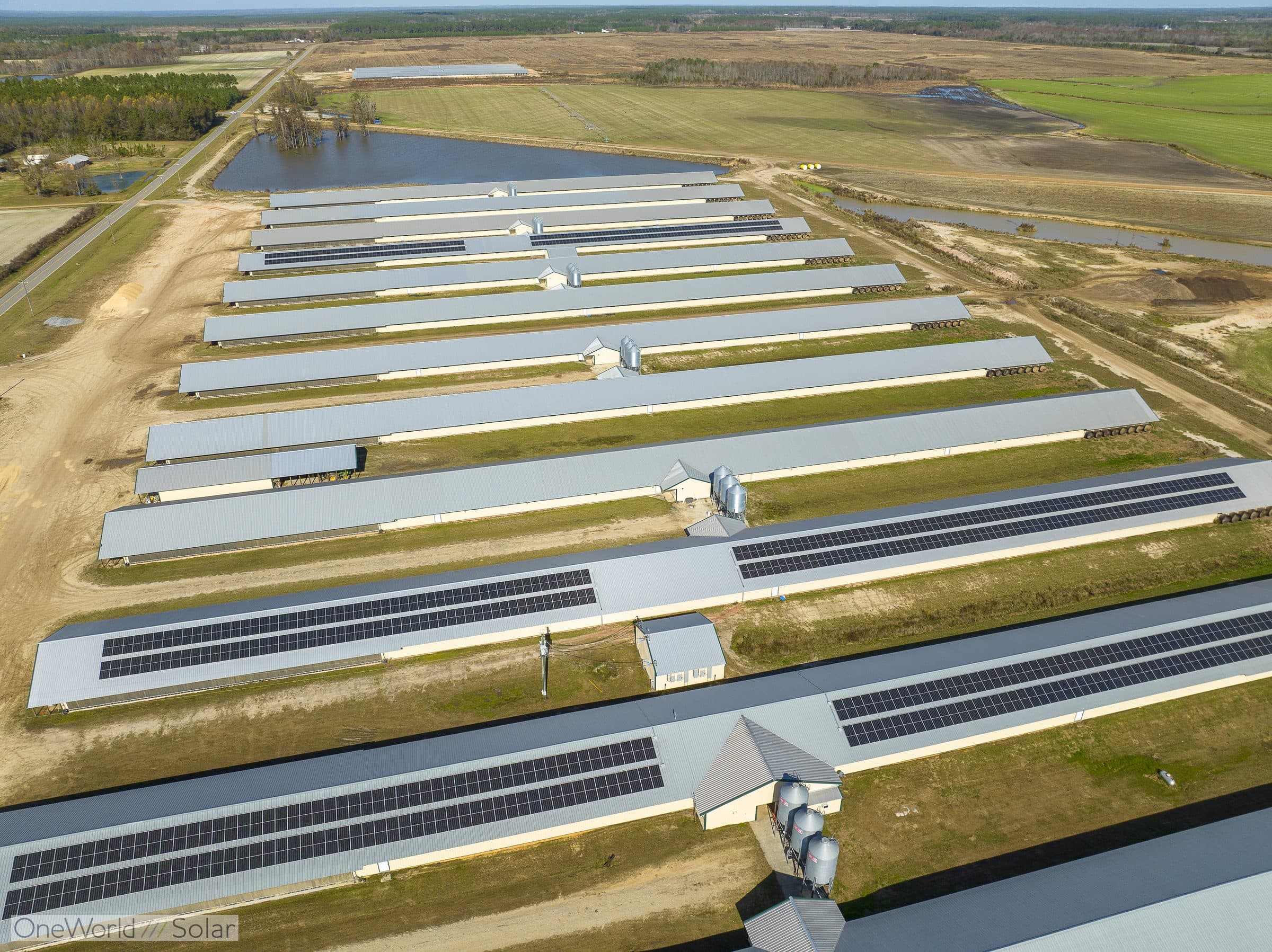
It is not fashion. It is that the loads which dominate an agricultural electric bill are usually electrical rather than thermal. On a poultry operation, ventilation runs year-round and peaks in the months a Southeast array produces most — the reasoning is set out in solar for poultry farms. Heat matters on those farms, but it is generally not the line item that hurts.
Reading your own bill to decide
You do not need a consultant for the first pass. You need two numbers.
What you spend on electricity in a year, from twelve months of utility bills. Take the total, not one month, because seasonality on an agricultural site is severe enough that any single bill will mislead you.
What you spend on the fuel that makes your heat — propane, natural gas, diesel, or the portion of your electric bill driven by resistance heating and water heating. This one is harder because the invoices come from a different supplier and rarely get totalled.
Put them side by side. If the electricity number is several times the heat number, you have an electrical problem and a thermal system will disappoint you no matter how efficiently it collects. If the two are comparable, or if heat is the larger of the two, solar thermal deserves a serious look and you should talk to someone who installs it.
The reason this simple test works is that neither technology can help with a cost you do not have. A collector cannot reduce a ventilation bill, and an array sized to your electric load will not meaningfully change what you spend on propane.
How REAP treats it
The Rural Energy for America Program funds renewable energy systems and energy efficiency improvements. It is written around a category rather than around one technology, and solar thermal has historically sat inside that category alongside photovoltaics, wind, and several others.
Two cautions, both of which apply to any statement anyone makes about REAP, including this one.
The rules change. Percentage caps, maximum awards and matching requirements have all moved more than once. Whatever was true for a previous funding round may not be true for yours.
Scope decides eligibility as much as technology does. How the project is described, what is bundled into it and when work begins all affect the outcome. Starting construction before an award is made is the single most common way applicants disqualify their own costs.
The person who can answer both is your USDA Rural Development state energy coordinator, and that conversation should happen before a budget exists rather than after. There is more on the application itself in our USDA REAP grant guide and in the REAP application walkthrough.
What we do and do not build
We are a photovoltaic and battery storage contractor. We do not install solar thermal, and we are not going to pretend that the technology we sell is the answer to a heat problem.
If your operation's cost is genuinely thermal, the right move is a contractor who does that work, and a REAP application built around it. If your cost is electrical — which, on most of the farms and plants we see across Georgia and the Carolinas, it is — then photovoltaics is the direct answer and we are glad to look at it.
The way to find out is to read your own bills. If you would rather not, send us twelve months of them and we will tell you which of the two you are looking at, including when the answer is the one we do not sell.