
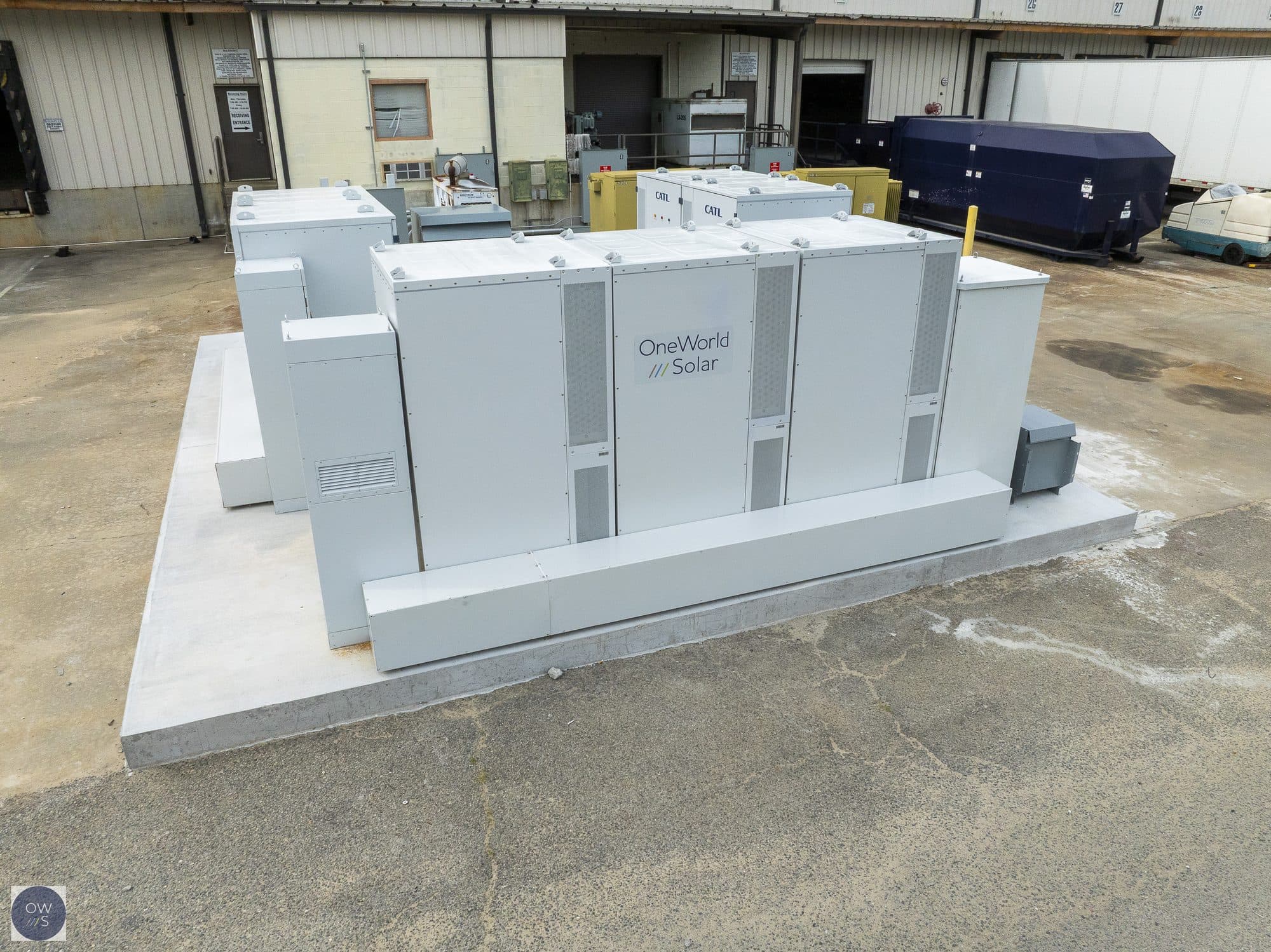
The honest answer to what does a commercial microgrid cost is that the question is missing its most important half. The same two words cover a system that keeps one control panel alive and a system that runs a distribution center through a three-day event. Those are not the same purchase, and no responsible number exists until somebody says which one you mean.
What can be described precisely is what moves the number, and in what order. If you understand that, you can scope your own project well enough to get comparable quotes, which is usually the real goal.
The four things that set the price
1. How much load you island
This is the largest single lever, and it is a decision rather than a fact about your building.
Almost nobody needs their entire electrical service islanded. What they need is a defined subset — ventilation, refrigeration, life safety, a process line, the server room — carried through an interruption while the rest of the site waits for the utility.
The cost difference between those two scopes is not marginal. It is the difference between equipment sized for a few hundred kilowatts and equipment sized for your whole peak, and it cascades into every other item on this list.
2. How many hours you need
Storage cost scales close to linearly with runtime. A battery that carries your critical load for one hour and a battery that carries it for six are, roughly, a one-times and a six-times purchase for the energy portion.
This is why the microgrid, generator or battery question matters before the budget question. Hours are cheap from a fuel tank and expensive from cells. Sites that need long runtime and cannot tolerate a transfer gap usually end up with both technologies, sized so that each does the part it is good at.
3. What your existing electrical system will accept
This is the item that most often surprises people, because it is invisible from the roof.
To island a subset of your loads, those loads have to be separable. In a building where the critical circuits are distributed across several panels — which is normal, because nobody wired the place anticipating this — separating them means new switchgear, new distribution, and conduit runs through an operating facility.
We have seen this work be a modest line item and we have seen it rival the cost of the generation equipment. Nobody can tell you which one you have without opening panels and looking.
4. The point of interconnection
Every foot of heavy AC conductor between your storage and the point of interconnection is cost and loss. So is a transformer the utility decides it wants. Where the equipment can sit relative to the existing service is a real cost driver, and it is why site layout comes up early in our conversations rather than late.
What we will not do
We will not give you a per-kilowatt rule of thumb for a microgrid. For a plain rooftop array a benchmark figure is a reasonable starting point, and we publish thinking about that in commercial solar cost per kW in Georgia. For an islanded system the ratio between generation cost and everything else varies so widely between sites that a rule of thumb is closer to a guess than a guide.
How to scope yours before asking for prices
Four steps, none of which require a contractor.
Write down what must stay running, circuit by circuit if you can, and be ruthless about it. Most lists shrink by half on the second pass.
Write down how long. Minutes, hours or days. If the honest answer is "until the utility comes back", find out from your utility what their typical and worst restoration times have been in your area, because that is the number you are actually designing against.
Find out whether those loads share panels with things you do not care about. This single fact moves budgets more than any equipment choice.
Pull twelve months of bills and, if you can get it, interval data. This tells us whether there is a demand charge worth attacking, which decides whether the storage has a second job or only the one — the distinction covered in when commercial battery storage pays off.
With those four answers, a quote means something and quotes from different contractors can be compared.
Where this fits with the rest of the project
A microgrid is usually not a standalone purchase. It is a solar project, a storage project and an electrical works project that happen to be procured together, which is why we handle it as a single commercial solar EPC contract rather than as three vendors coordinating by email.
More on the design and islanding side is in commercial microgrid installation. If you want the four questions above worked through against your facility, send us the bills and we will come back with a scope before anyone talks about a price.