
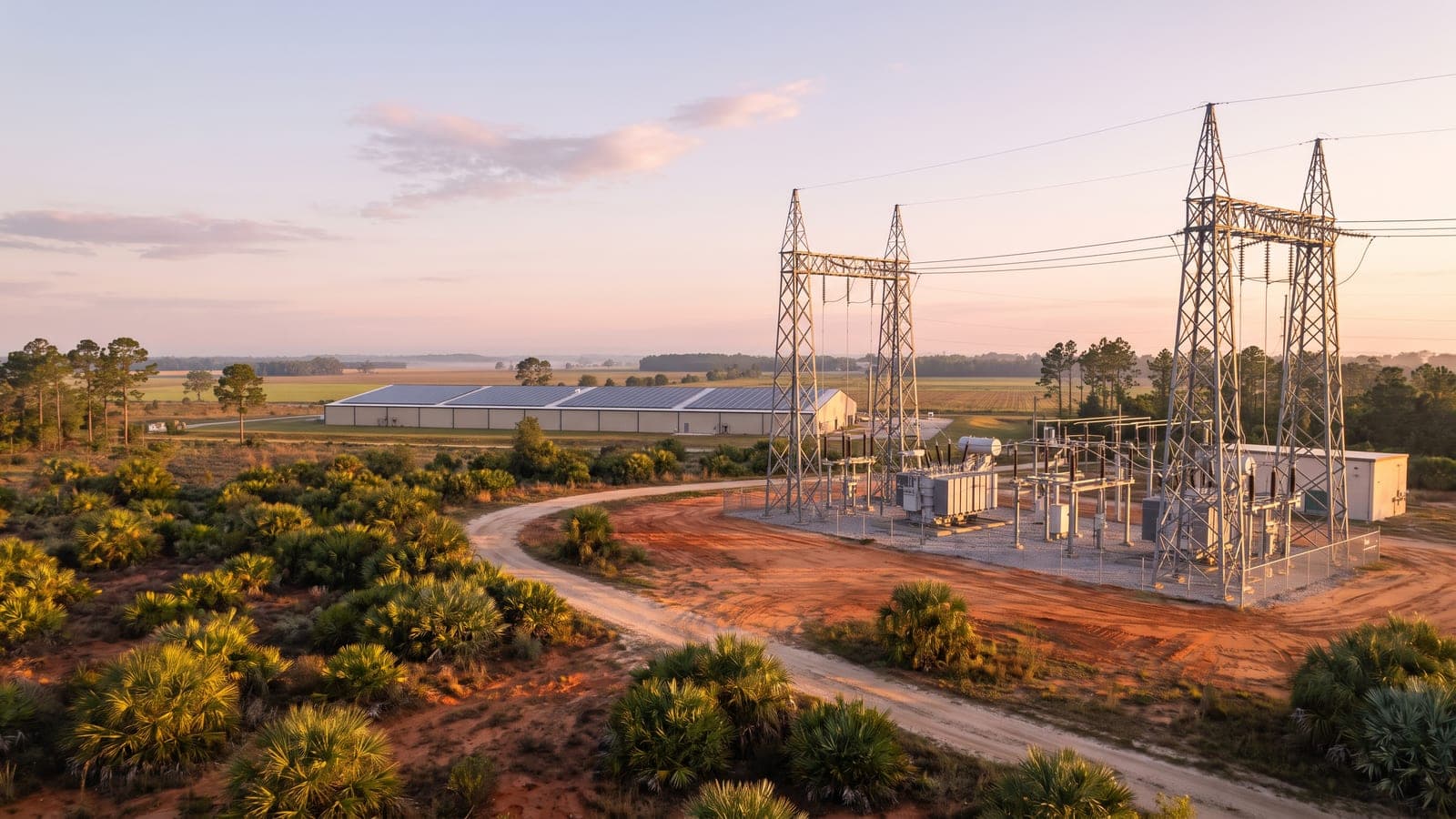
Florida's large load tariff filings arrived at the Public Service Commission in two different shapes. Florida Power & Light filed on October 1, 2026 and told regulators that the rate structure already approved for 2026 through 2029 satisfies the new state law. Tampa Electric filed a day earlier, on September 30, with a tariff written for customers it does not yet have. Senate Bill 484 set the deadline, and the Commission now reviews what came in. We covered the requirement itself in the October 1 data center tariff deadline, and this is what the utilities actually put on the record.
What FPL told the Commission
FPL's position is that nothing new is needed because the protections are already in its tariffs. In its October 1 statement the company lists what a data center applicant has to accept: funding an engineering study of feasibility and connection costs, funding 100 percent of the cost of the new power generation needed to serve the project, building, owning and operating its own substation, accepting high voltage service, paying up front for new or upgraded facilities, meeting collateral and credit requirements to reserve capacity, and signing a minimum contract term of 20 years.
Two terms do the heavy lifting after the plant is running. A minimum bill means the customer pays for the capacity it reserved even if it does not use all of it, and early termination triggers accelerated payment of the remaining generation costs. Scott Bores, FPL's president and chief executive, frames the structure as keeping customers from being left paying for underutilized infrastructure. The Commission approved that structure in November 2025 and still has to review whether it answers the statute.
What Tampa Electric proposed
Tampa Electric took the other route and filed a tariff. Company spokesperson Cherie Jacobs told Bay News 9 that it would require large load customers such as data centers to pay for the electric infrastructure that powers them, and to carry some of the cost of maintaining and operating the broader system they draw on. The outlet reports that the utility does not serve any large load customers at present, and that Jacobs said the company is seeing interest from large load customers for potential opportunities in the future.
That sequence is worth noticing. A tariff written before the first 50 megawatt customer signs is a far easier document to get right than one written after the load is connected and the generation is half built. Bay News 9 reports that Commission approval could come late this year or early in 2027.
Does a 500 kW business feel any of this?
Not on next month's bill. The Florida Senate summary puts the threshold at an anticipated monthly peak of 50 megawatts or more at a single location, measured as the highest average load over a 15-minute interval. A hotel, a dealership, a cold storage building or a packing plant is two orders of magnitude below that and stays on its ordinary commercial schedule.
The reason to follow it anyway is that these filings decide who pays for the next tranche of generation and transmission in Florida. If the cost of serving very large loads sits with those loads, it does not migrate into the rates a commercial customer pays over the following decade. That is the whole argument of the statute, and it is being settled now in two dockets rather than in a future rate case.
The two numbers that are yours to move
While the Commission works through the filings, the levers on a commercial site are the same as they were. Kilowatt-hours and monthly peak demand set the bill, and both respond to equipment rather than to orders. An array sized to the load takes energy off the meter during the hours a Florida building is working hardest, commercial battery storage shaves the fifteen minute peak that sets the demand charge, and power factor correction removes a penalty that many commercial customers pay without reading it on the bill.
We work in this market on both sides of the meter. The 32 kW array at the TECO Manatee Viewing Center was built for a Florida utility's own site, and our approach to commercial solar installation in Florida treats the interconnection tariff of each utility as a design input rather than paperwork at the end. For properties where the summer peak and the guest experience arrive together, solar for hotels and resorts follows the same logic. On the tax side, the 30% federal solar investment tax credit is claimed on the customer's own return, which keeps the savings case independent of what any commission decides.
Give us twelve months of bills and a service address and we will model the two numbers you control, under your current schedule rather than a statewide average. Start from the commercial solar savings calculator if you want a first estimate before a conversation.