
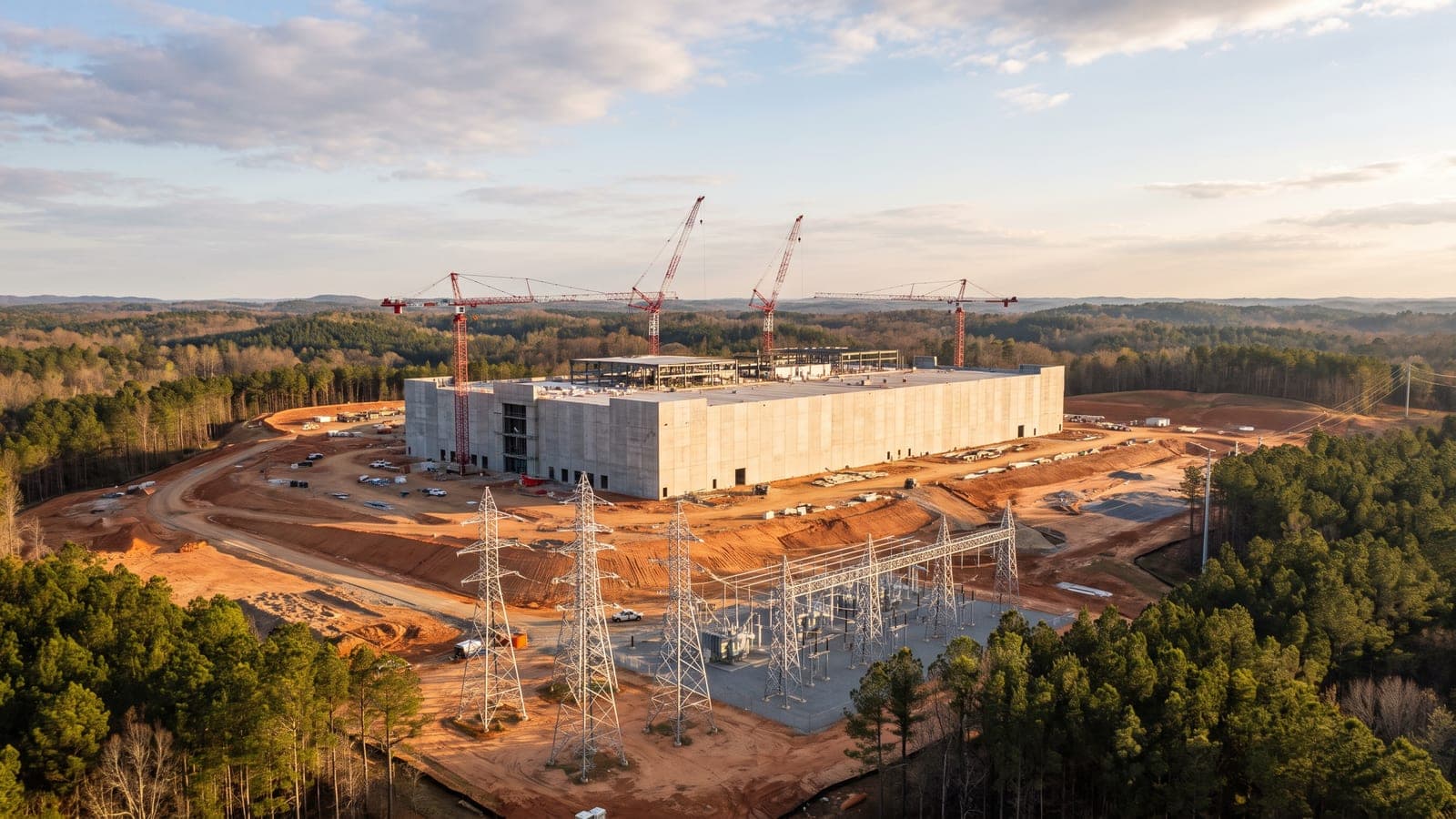
A data center rate class in North Carolina is now formally on the table. On September 14, 2026, Attorney General Jeff Jackson asked the North Carolina Utilities Commission to create a dedicated rate class for Duke Energy's data center customers, as part of a framework filed in Duke's rate cases. The release quotes Duke's own projection that 80 percent of the new energy demand the utility must meet comes from new data centers and other large users of energy, and states the aim plainly: that the costs and risks created by data centers are not shifted to residential customers.
For a manufacturer, a distribution center or a hotel on the Duke system the filing matters for a different reason. The rules that decide how a 100 megawatt customer pays for the plants and lines built to serve it also decide how much of that cost reaches everyone else's bill, and the decision is being made now, in cases that set rates from January 2027.
What does the Attorney General's framework contain?
Five things, according to the release. A new rate class for data centers and other large energy users. A requirement that Duke make public the template contracts it uses with them. Reports on any agreement that departs from those templates. Load projections every 90 days instead of every six months. And a pause on new natural gas plant development while the most recent updates to Duke's load forecast are evaluated.
The Attorney General's statement is direct: "Duke Energy is onboarding an unprecedented number of data centers without a clear plan on how to protect ratepayers from higher rates and unacceptable risk. These data centers are upending our energy system, and we need to know that the Utilities Commission is making sure data centers pay for the strain they put on the grid and don't unfairly burden ratepayers."
The release places the proposal against the two rate cases in progress. It refers to a Duke Energy Carolinas settlement carrying a 9.5 percent residential increase, which the Attorney General declined to sign, and to a Duke Energy Progress proposal it describes as $960 million in rate increases over two years under a 15 percent request. We reported the Progress settlement, which would raise rates in two steps from January 1, 2027, in what the Duke Energy Progress settlement means for a North Carolina business.
What this means for a business on the Duke system
The mechanics are the same ones we described last week in large load tariffs in the Southeast. Florida Power & Light already has contract schedules for new load of 50 megawatts and more, Georgia Power has minimum billing and longer terms for customers above 100 megawatts, and Santee Cooper has an experimental large load schedule. Each is an attempt to keep the generation and transmission built for a very large customer on that customer's bill. North Carolina has had no dedicated class so far, and the September 14 filing asks the Commission to create one.
For an ordinary business the outcome is protective if it passes, and the timing is slow either way. A rate class, once ordered, applies to contracts signed afterward; the plants already approved are recovered through the rate cases now being heard; and the Commission's ruling on the paused solar and storage procurement, expected around October 5, sits in the same set of proceedings, as we described in why a business should not wait for the October 5 RFP ruling. None of that reaches a commercial bill before 2027, and all of it reaches it eventually.
There is one part of the bill that does not wait on a docket. Demand charges and energy charges are set by what the meter records, and a site that generates part of its own power and shifts consumption off the peak window lowers both, whatever class the data centers end up in. That lever needs twelve months of bills and an engineer, not a Commission order.
How we build in Duke territory
Our commercial solar installation in North Carolina is engineered by a professional engineer licensed in the state and an electrical contractor holding North Carolina's unlimited classification since 1992, with interconnection applications prepared in the format Duke's procedures expect. Array, electrical work and interconnection are delivered under one commercial solar EPC contract, which keeps the schedule with the owner rather than in the utility's queue.
Where a tariff prices the peak hours hard enough, we add commercial battery storage sized to those hours rather than to the whole load, which is the same shift the utility is trying to buy from the data centers themselves. The largest example in our portfolio is the 1.267 MW rooftop system with 55,000 pounds of batteries at Samsonite and TUMI in Vidalia, built under a single contract. The federal investment tax credit that helps pay for a project like it is claimed on the owner's return, subject to the owner's tax position, and its conditions are on our federal solar tax credit page.
If your business is in Duke Energy Carolinas or Duke Energy Progress territory and you would rather decide your own power cost than wait for the Commission to allocate someone else's, send us twelve months of utility bills. We will size a system to your load and your tariff and show you what it takes off the bill from the month it is commissioned.