
The North Carolina solar RFP pause has a new date on it. According to an August 28 account by the Southern Alliance for Clean Energy, the North Carolina Utilities Commission order of April 23, 2026 that paused Duke Energy's 2026 solar and battery storage request for proposals is now expected to be ruled on around October 5, after the Alliance and other parties sued the Commission on June 18 and oral arguments were heard on August 3. The RFP is a competitive procurement the Commission itself required in its 2024 Carbon Plan and Integrated Resource Plan order, and the Alliance writes that the pause "froze a procurement that clean energy advocates, developers, and even some large customers had been planning around for over a year."
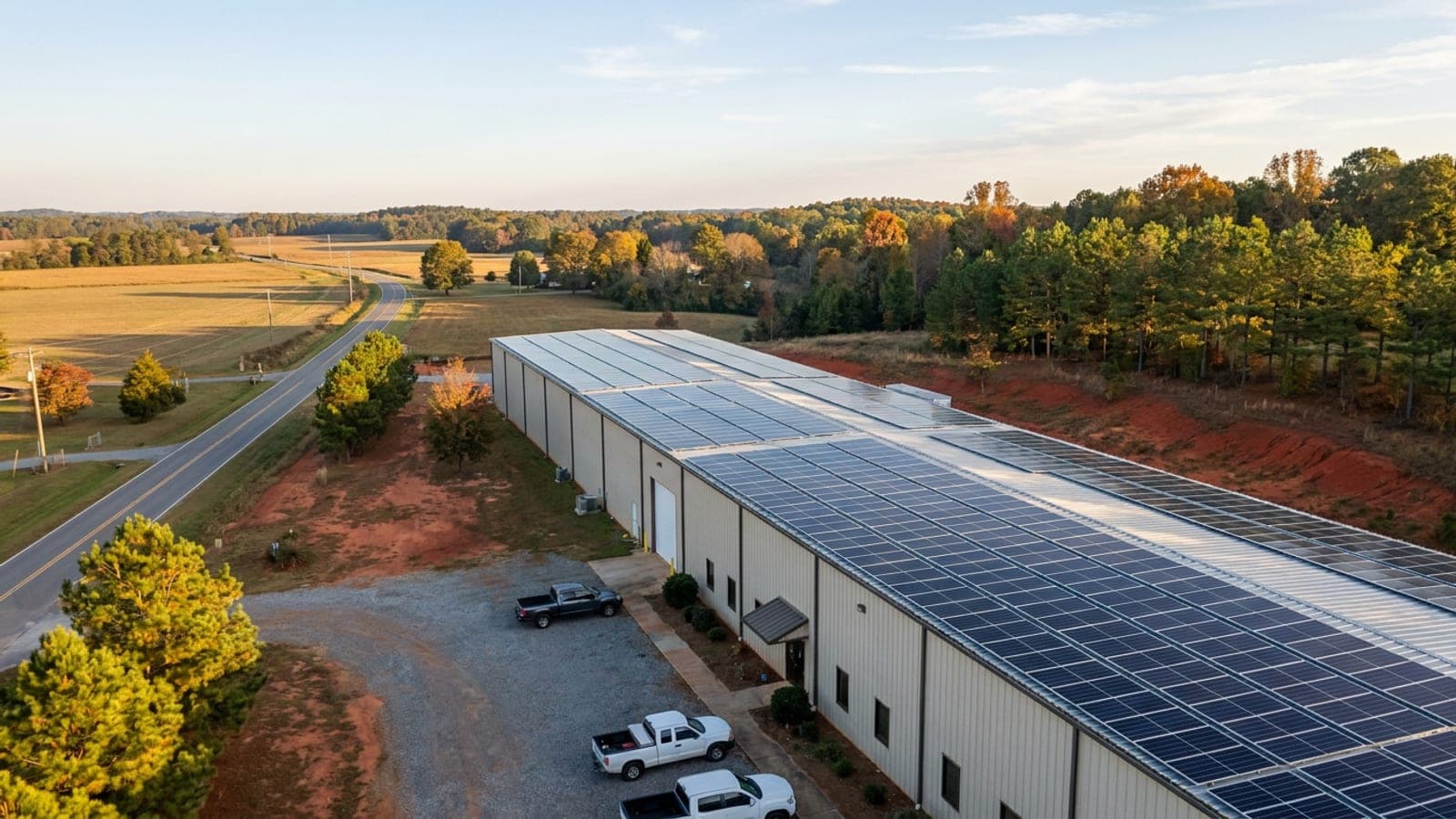
For a business in Duke territory the case is worth following for what it says about future power costs. It is also worth understanding what it does not touch, which is the project a business can build on its own roof or land.
What did the April 23 order do?
The order, issued by Commissioner Brawley, deferred Duke's 2026 solicitation for solar and storage capacity that would have been contracted under the Carbon Plan. The lawsuit filed on June 18 argues, in the Alliance's words, that "the deferral order violated multiple statutes governing the Commission's actions, as well as the North Carolina Constitution's due process and access-to-judicial-review guarantees." The Commission heard oral arguments on August 3 and, the Alliance reports, "the case is now delayed to October 5, 2026 while the parties await the NCUC's ruling."
The procurement sits inside a larger plan. Duke's 2026 Carolinas resource plan, which we covered in Duke Energy's Carolinas resource plan for solar and storage, calls for about 18.5 GW of solar and 13 GW of battery storage by 2041. The 2026 RFP was one of the first purchases toward that total.
What this means for a business's power bill in North Carolina
The Alliance's argument for urgency is about fuel. "Every megawatt of solar that gets delayed, shrunk, or rolled into a future," it writes, "is a megawatt of gas that takes its place instead. That has two consequences for customers: it raises the system's exposure to volatile gas prices, and it works against the least-cost planning standard." Fuel costs pass through to customers, and commercial and industrial accounts carry a large share of them.
That effect arrives slowly, through rate cases and fuel filings, over years. The rate case Duke Energy Progress settled this summer, which we reported in what the Duke Energy Progress settlement means for a North Carolina business, would raise rates in two steps from January 1, 2027. Whatever the Commission decides on October 5 will reach a bill later still. A business that wants to change its power cost on a shorter timeline has one instrument that runs on its own schedule, and that is generation and storage it owns behind its own meter.
A customer-owned system is not part of the RFP. It goes through Duke's interconnection procedures as a generating facility on the customer's side of the meter, and nothing in the April order or the lawsuit changes that path. The federal investment tax credit is claimed on the owner's own return, and the credit's construction and placed-in-service deadlines, described on our federal solar tax credit page, reward a project that starts in 2026 rather than one that waits for the utility's plan to settle.
How we build in North Carolina
Our commercial solar installation in North Carolina is engineered by a professional engineer licensed in the state and an electrical contractor holding the state's unlimited classification since 1992, with interconnection applications prepared in the format Duke's process expects. We deliver the array, the electrical work and the interconnection under one commercial solar EPC contract, so the timeline is ours to manage rather than a chain of subcontractors.
Where the load justifies it we add commercial battery storage to move consumption off the peak hours the tariff prices highest, which is the same arbitrage the utility is trying to buy at scale. The largest example of the combination in our portfolio is the 1.267 MW rooftop system with 55,000 pounds of batteries at Samsonite and TUMI in Vidalia, built and commissioned under a single contract.
If your business is in Duke Energy Carolinas or Duke Energy Progress territory and you would rather not wait for October, send us twelve months of utility bills. We will size a system for your site, run the numbers against your current tariff and the rates now scheduled for 2027, and tell you what the project does to your bill on a timeline you control.