
The Form 3468 instructions now say what the deadline is. In the revision dated August 27, 2026, the Internal Revenue Service's Instructions for Form 3468, the form on which a business claims the investment credit, incorporate the July 2025 tax law and state, in the overview of the clean electricity investment credit, that the law "added a termination of the credit for wind or solar facilities placed in service after 2027 where the beginning of construction is after July 4, 2026." The same paragraph notes that the law "restricted material assistance from prohibited foreign entities" and added related restrictions.
None of this is new law. We reported the deadlines when the statute passed in what the 2027 deadline means for the commercial solar tax credit, and the foreign entity cost test when the IRS issued its interim guidance in prohibited foreign entity rules for solar. What is new is that the rules are now on the instructions a preparer reads while filling in the return, which is where a project's paperwork is finally tested.
What the instructions say a 2026 project must show
Three things, in the IRS's own words. On timing: a solar facility placed in service after 2027 gets no credit if construction began after July 4, 2026, so a project that starts after that date has to be in service by the end of 2027, and one that starts before it keeps the ordinary rules. On sourcing: "if the construction, reconstruction, or erection of a qualified facility or qualified interconnection property includes any material assistance from a prohibited foreign entity (as defined in section 7701(a)(52)) and construction, reconstruction, or erection begins after 2025, no credit will be allowed." On storage: energy storage technology property is property that receives, stores and delivers energy for conversion to electricity with a nameplate capacity of not less than 5 kilowatt hours, along with thermal storage, and it qualifies in its own right.
The instructions also carry the administrative detail that decides the rate. A business claiming the increased credit for meeting the prevailing wage and apprenticeship requirements must file Form 7220 for each facility, property, project or energy storage technology.
What this means for a business in the Southeast planning a system
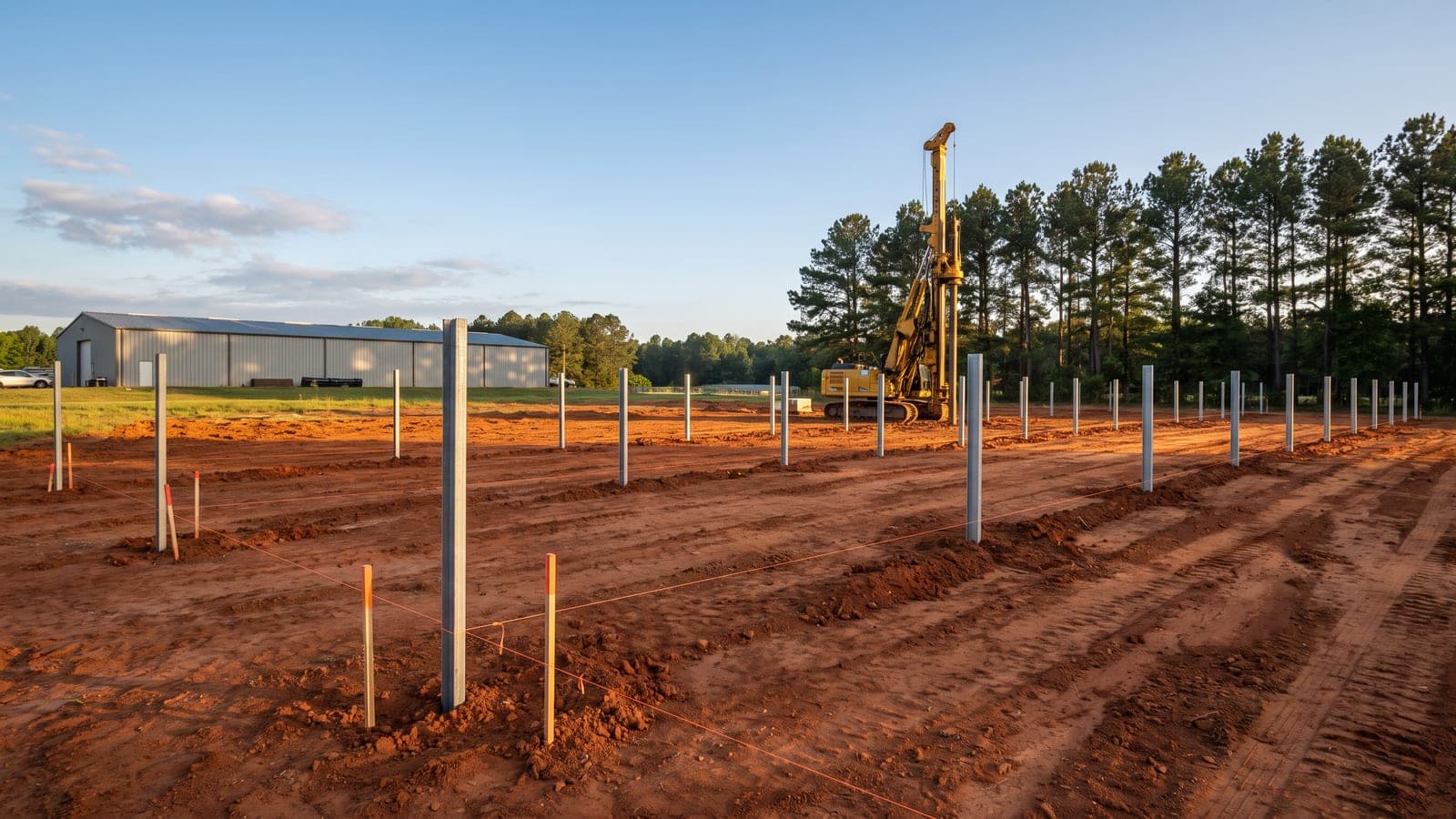
The date that matters most is the one the instructions do not define: when construction began. The termination rule and the foreign entity rule both turn on it, and the IRS has said its earlier begin-construction notice for the termination dates does not settle the question for the foreign entity rules. A project in Georgia, Florida or the Carolinas that is contracted this fall should therefore create its own record: the signed contract, the date physical work of a significant nature started on the site or on custom-ordered components, and the continuous progress that followed. That record is cheap to build during the project and expensive to reconstruct at audit.
The second file is the supplier certifications for modules, inverters and cells, which the foreign entity rule requires and which, as we noted in our report on the final solar duties on India, Indonesia and Laos, is the same document a buyer wants for tariff exposure anyway. The third is the placed-in-service evidence: the interconnection approval and the commissioning report with dates.
How the credit interacts with depreciation, and why the order of the two is the accountant's decision, is on our Section 179 solar depreciation page. The credit's conditions as a whole are on our federal solar tax credit page. The credit is claimed on the owner's return, subject to the owner's tax position, and is never assured in advance.
How we build the file
We deliver every project under one commercial solar EPC contract, and the documents the instructions call for are produced as the project moves rather than after it: the contract and notice to proceed, dated site photographs and daily logs from the first day of physical work, the supplier certifications requested before purchase orders are placed, and the commissioning package with the utility's permission to operate. On the 1.267 MW Samsonite and TUMI project in Vidalia, the array and the 55,000 pounds of storage were documented in one set, which is what a preparer wants to receive.
If your business is weighing a system and the July 4, 2026 date is in view, send us twelve months of utility bills. We will size the system, give you a construction schedule that puts the beginning of construction where the instructions need it, and hand your adviser the file the form asks for.