
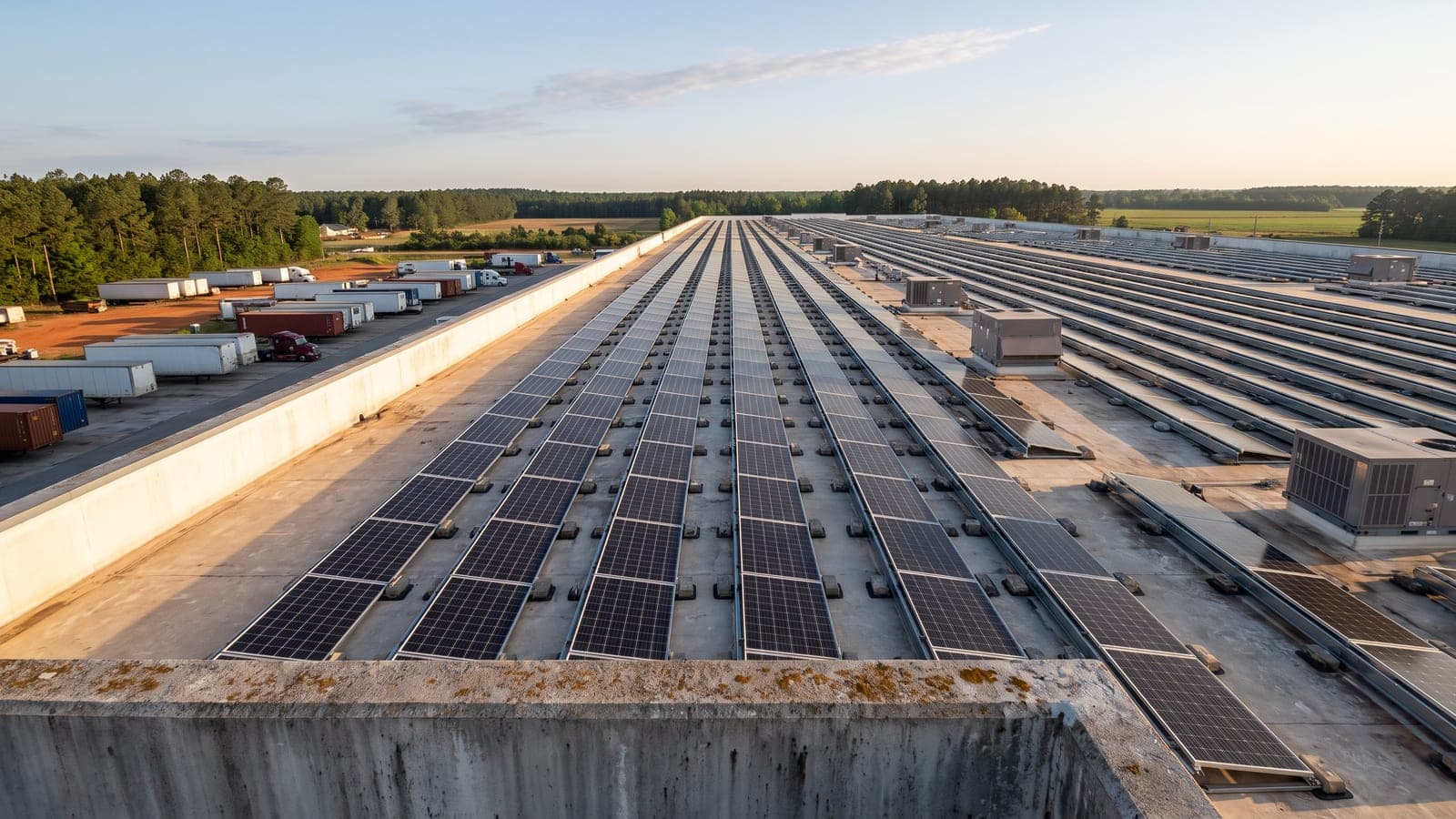
The solar tax credit basis reduction is the rule that decides what a 30 percent credit is actually worth once the first year's return is filed, and it is the part of the arithmetic most proposals leave out. Section 50(c) of the Internal Revenue Code reduces the basis of property by the amount of the investment credit determined on it. For solar and storage there is a concession: paragraph (3) provides that in the case of any energy credit or clean electricity investment credit, "only 50 percent of such credit shall be taken into account" in that reduction.
Put the numbers on a system. A commercial array installed for $400,000 with a $120,000 credit does not depreciate $400,000, and it does not depreciate $280,000 either. Half the credit, $60,000, comes off the basis, leaving $340,000 to be recovered through Section 179, bonus depreciation or the regular schedule. That $60,000 difference against a full reduction is worth real money to a profitable business, and it is why the credit and the depreciation have to be modeled together rather than added up.
What happens to credit a business cannot use this year?
It waits. The investment credit is part of the general business credit, and section 39 provides that an unused amount becomes "a business credit carryback to the taxable year preceding the unused credit year" and then "a business credit carryforward to each of the 20 taxable years following the unused credit year." The instructions for Form 3800, the form on which the general business credit is figured, state the same rule: unused general business credits may generally be carried back one year and carried forward twenty.
That matters for two kinds of buyer we meet often. A farm or a family business with an uneven tax year is not disqualified by a thin year; the credit follows the return forward. And a business that has just made a large equipment purchase, and whose current-year credits exceed its liability limit, is choosing an order rather than losing value. The interaction with the depreciation elections is set out on our Section 179 solar depreciation page, and the sequencing question in stacking the solar tax credit with Section 179.
How long does the credit stay at risk?
Five years. Section 50(a) recaptures the credit if property ceases to be investment credit property before the end of five full years after it is placed in service, on a sliding scale: 100 percent in the first year, then 80, 60, 40 and 20 percent through the fifth. Paragraph (2) of subsection (c) restores basis when a recapture happens, so the two rules move together.
In practice recapture is a question about the building rather than the panels. A company that sells the facility with the array attached, or that removes a system during a renovation, should raise it with its accountant before the transaction rather than after. A company that owns its site and keeps operating has nothing to manage here beyond the calendar.
What this means for a project being priced now
Three numbers belong in the file from the start: the installed cost split into equipment, labor and soft costs; the placed-in-service date, supported by commissioning and the utility's permission to operate; and the credit amount, which drives both the basis adjustment and the certifications the credit now requires. We set out the paperwork the rules ask for in what the Form 3468 instructions say about the solar deadline, and the extra ten points available for American-made equipment in the domestic content bonus credit.
The federal credit's own conditions and deadlines, which reward a project that begins construction in 2026, are on our federal solar tax credit page. None of these benefits is automatic. Each is an election the owner makes on the owner's return, subject to the owner's tax position, and none should be treated as assured before an accountant has run it.
How we hand this to your accountant
Every project we deliver comes under a single commercial solar EPC contract with one invoice structure, so the basis is not reconstructed months later from a stack of subcontractor bills. On the 117 kW ground-mounted system at Swainsboro Supply Company, which saves the customer about $1,800 a month, the cost breakdown, the commissioning record and the interconnection approval were handed over as one package.
If you are weighing a system and want the after-tax picture rather than the sticker price, send us twelve months of utility bills. We will size it, price it, and give your accountant the figures the basis adjustment and the carryforward need.