
The domestic content bonus credit for solar is the part of the federal incentive that most commercial buyers never price, and for a system under 1 megawatt it is the easiest ten points to qualify for. The IRS page on the bonus, last updated January 23, 2026, states the rule in two lines. A project that satisfies the domestic content requirement receives a ten percentage point increase in the investment credit if it also meets any one of three conditions: a maximum net output under 1 megawatt, construction begun before January 29, 2023, or compliance with the prevailing wage and apprenticeship requirements. Otherwise the increase is two points.
Most of the systems a business in the Southeast installs, a dealership roof, a poultry complex, a mid-sized plant, are under 1 megawatt. For those projects the full ten points turn on one question: where the equipment was made.
What does the domestic content requirement ask for?
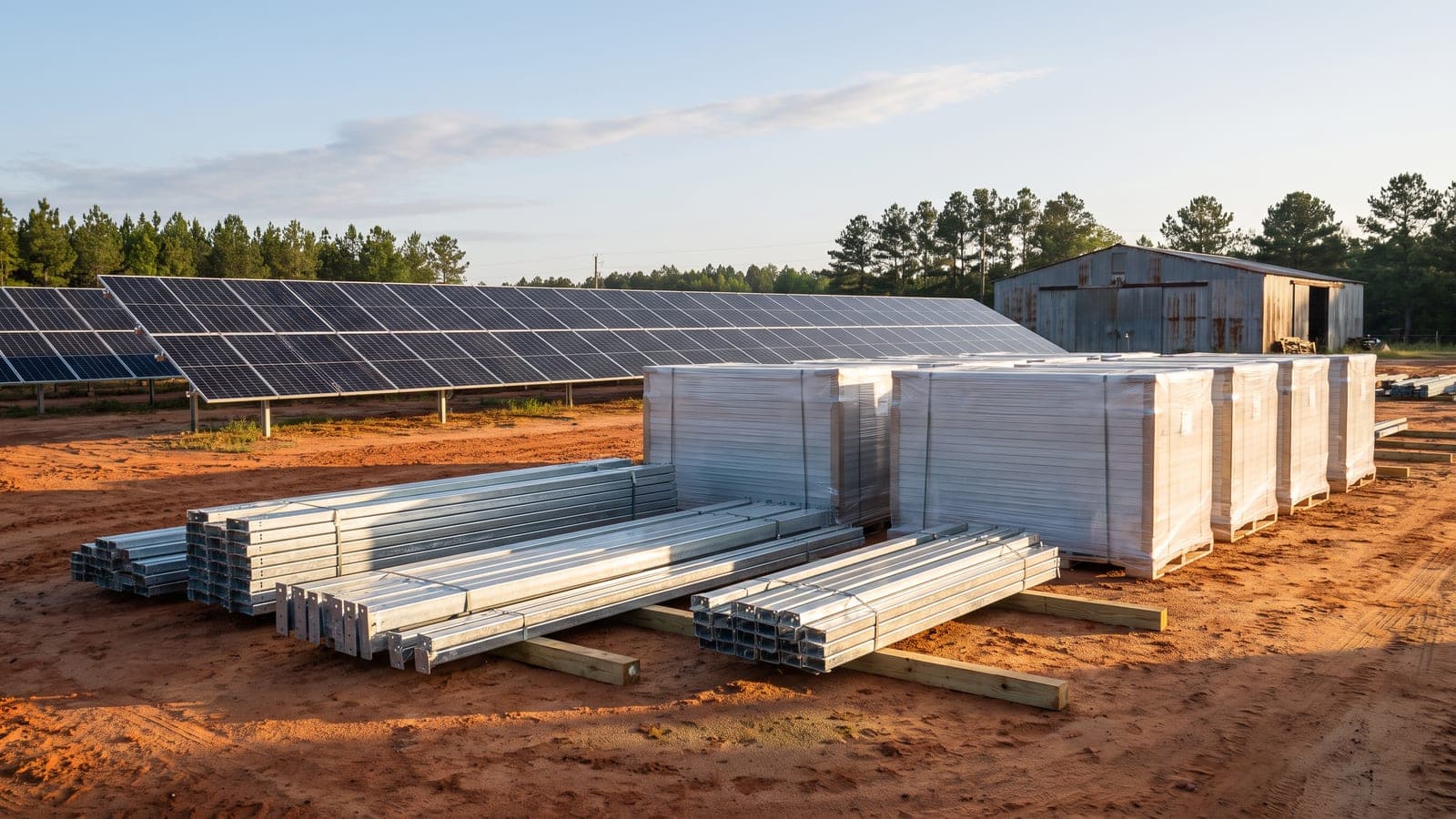
Two tests, set out in Notice 2023-38. The first covers structural steel and iron, which must be produced in the United States under the standard the IRS borrows from federal transit procurement. In a ground-mounted array that means the steel piles and the reinforcing in the foundations; the IRS treats those as steel or iron products.
The second covers manufactured products: modules, inverters, racking or trackers. They are deemed domestic if a set share of their total cost is attributable to products and components mined, produced or manufactured in the United States. The IRS calls the share the adjusted percentage. Notice 2023-38 puts it at 40 percent for projects under the older energy credit and says that under the technology-neutral credits it rises from 40 percent for facilities whose construction begins before 2025 to 55 percent for those beginning after 2026. The year construction begins decides the bar, and it is a figure to confirm with a tax adviser before equipment is ordered.
How do the safe harbor tables make this workable?
Collecting direct cost data from every manufacturer in a supply chain is impractical, and the IRS acknowledged it. Notice 2024-41 and its update, Notice 2025-08, publish tables that assign a fixed cost percentage, obtained from the Department of Energy, to each manufactured product and component in a typical solar photovoltaic or battery storage project. A taxpayer who elects the safe harbor adds the assigned percentages of the items that are domestic and compares the total with the adjusted percentage.
The tables show where the weight sits. In the IRS's worked example for a ground-mounted array, which we cited in our report on the prohibited foreign entity rules for solar, photovoltaic modules carry 65.8 percent of the assigned cost. A project with domestic modules is most of the way there on modules alone; a project without them has to find the percentage in inverters and racking, which is much harder.
What this means for a business planning a system in the Southeast
Domestic modules cost more than imported ones, and the question for a buyer is whether the ten points are worth the difference. The arithmetic has shifted this year. The final solar duties on India, Indonesia and Laos and the Section 232 measures that start in December have narrowed the gap between imported and domestic modules, and the supplier certifications a project now needs for the foreign entity test are the same documents the domestic content statement rests on. One supplier file supports both.
The bonus is claimed by attaching a domestic content certification statement to Form 3468 with the return for the first year the bonus is reported, as the IRS page sets out, alongside the rest of the credit file we described in what the Form 3468 instructions say about the solar deadline. How the credit then interacts with depreciation is on our Section 179 solar depreciation page, and the conditions of the credit as a whole on our federal solar tax credit page. None of it is automatic. The credit and the bonus are claimed on the owner's return, subject to the owner's tax position, and are never assured in advance.
How we price the choice
We deliver every project under one commercial solar EPC contract, and on request we price it twice: once with the lowest-cost compliant equipment and once with equipment that meets the domestic content tests under the safe harbor tables, with the assigned percentages added up on the proposal. The owner's accountant can then put ten points of credit against the difference in price and decide. On a system the size of the 117 kW ground mount at Swainsboro Supply Company, well under the 1 megawatt line, the full bonus is available without the wage and apprenticeship test.
If you are planning a system and want to see both prices side by side, send us twelve months of utility bills. We will size it, price both equipment sets, and hand your adviser the supplier file the certification statement needs.