
The Duke Energy rate increase approved by the North Carolina Utilities Commission on Monday, November 16, settles the number every business in the state has been waiting for. Averaged across all customers, rates rise about 3.7% a year for two years at Duke Energy Carolinas and about 3.4% a year at Duke Energy Progress, according to Duke Energy's release on the orders. The first step lands on January 1, 2027 and the second on January 1, 2028.
The Commission largely accepted the settlements we covered when the Duke Energy Carolinas rate increase 2027 was still awaiting a decision. Now the figures are final, and so is the calendar.
What did the Commission approve?
Two rate plans, one for each utility, built on the negotiated settlements that cut Duke's original requests. WRAL reports that the plans bring in about $834 million of additional annual revenue across all customer classes by the second year, with about $7.2 billion of capital investment over the two years. The authorized return on equity is 9.8% for both utilities, against the 10.95% Duke first asked for.
The orders add a refund, with interest, if planned infrastructure upgrades are not finished on time, and $20 million from Duke shareholders for customers who need help with their bills. Duke Energy Carolinas and Duke Energy Progress combine into one company on January 1, 2027, but their rates stay separate and will blend gradually through later rate cases. The parallel eastern case is covered in our earlier piece on the Duke Energy Progress rate settlement.
What does it mean for a commercial bill?
Residential customers take 4.8% a year at Duke Energy Carolinas and 4.7% at Duke Energy Progress, above the all-customer average. That means the commercial and industrial classes, taken together, sit below it. The release does not give a percentage for each commercial schedule, and we will not estimate one.
The exact tariffs are close. The Commission gave Duke 10 days to file revised revenue calculations and 30 days to file updated rate schedules for approval, so a plant manager or dealership controller should be able to price 2027 before the year starts. When the schedules appear, look at how the increase splits between the energy charge and the demand charge. A facility with a sharp afternoon peak and one with a flat load can face very different results from the same average.
Why do the data center rules matter to everyone else?
For the first time, North Carolina has a separate rate schedule for data centers of 50 megawatts or more. Those customers must pay demand charges on at least 75% of their contracted demand, sign contracts of at least 10 years (15 years at 100 megawatts and above), pay up front for facilities built only for them, and post security for transmission upgrades. Exit charges cover the cost of generation that would otherwise fall on remaining customers.
The commission noted that data centers account for 92% of the 6.7 gigawatts Duke contracted with new large customers in the Carolinas between March 2024 and April 2026. Those terms are designed so that a warehouse or a poultry processor does not end up paying for a plant built for a campus that never arrives. We followed how this started in our piece on a data center rate class in North Carolina.
Which date is still worth building toward?
January 1, 2027 is six weeks away, and no commercial system started today will be running by then. The second step is the one a business can plan for. On December 31, 2027, one day before it, a solar project that starts construction now must be placed in service to claim the 30% federal solar tax credit. A project begun this winter can meet both dates if the interconnection request goes in early.
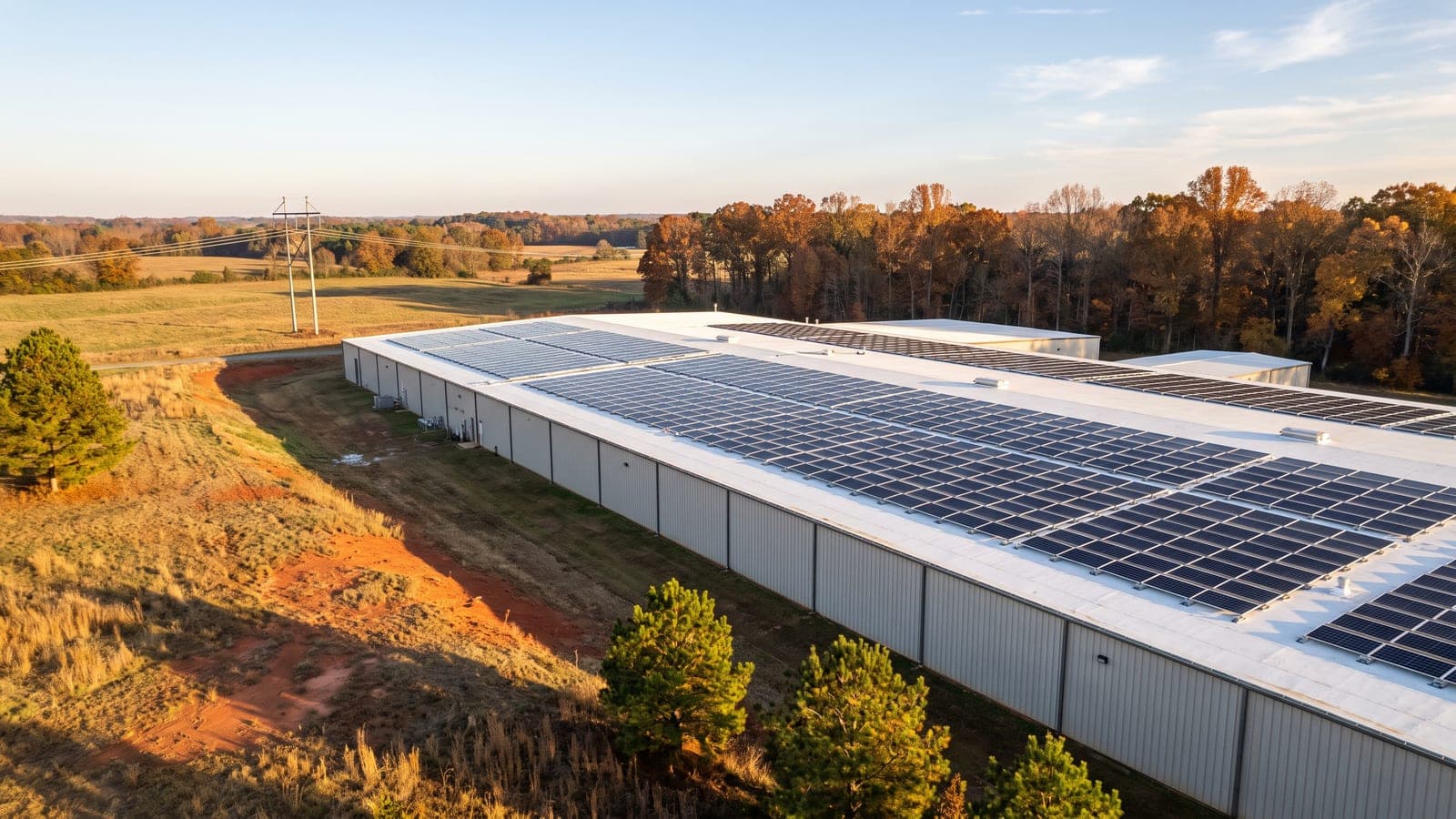
We have built commercial solar across the Southeast since 2001, and our page on commercial solar installation in North Carolina explains how projects move through Duke territory. We read a bill in three parts. An array replaces daytime kilowatt-hours at a price fixed on the day it is commissioned. Commercial battery storage sized from interval data trims the demand charge, which a single cloudy afternoon can set. The 1.267 MW rooftop solar and battery system we built for Samsonite and TUMI in Vidalia, Georgia, pairs the two at industrial scale. Storage also sits outside the 2027 solar deadline, so a battery can be decided on its own numbers.
Pull your last twelve Duke Energy bills and send them to us for a free review. We will show you what the 2027 and 2028 steps add to each line, what a system would take off it, and whether a project can be in service before the end of 2027.