
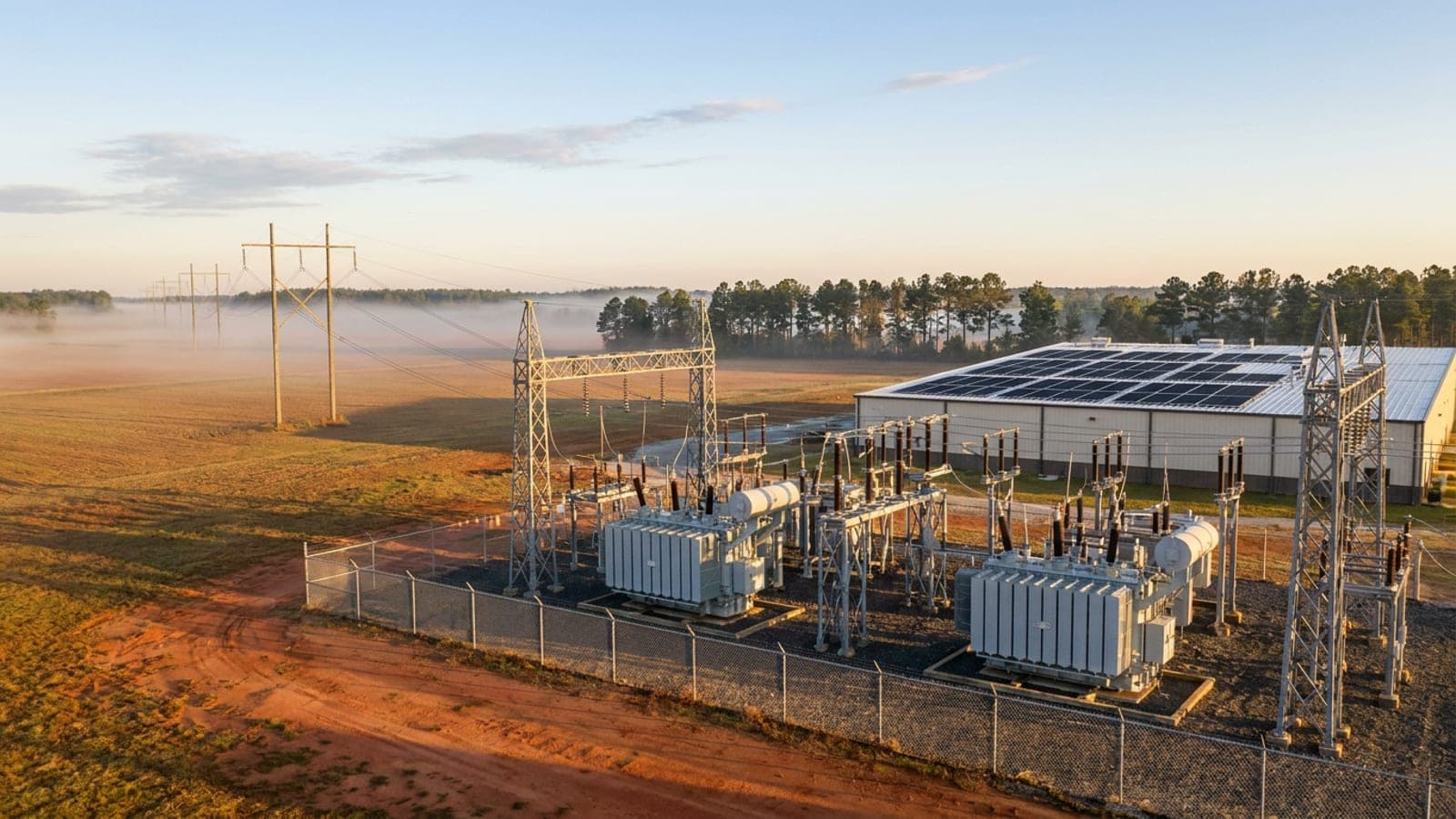
The Georgia Power real-time pricing docket now has a number and a hearing behind it. The Georgia Public Service Commission's calendar lists Docket No. 57171, titled RTP Revenue Credit and Allocation Methodology, with a hearing on September 1, 2026 at 9:35 a.m. following the Commission's 9:30 administrative session, and it names Georgia Power Company as the utility. The title is the substance. The Commission is examining how the revenue Georgia Power collects under its real-time pricing tariffs is credited, and how the resulting amounts are allocated.
That sounds like accounting, and it is. It is also the kind of accounting that decides which customers end up carrying which costs, which is why a business on a demand tariff or on RTP in Georgia should know the docket exists before the Commission decides anything at all.
What is real-time pricing, and who is on it?
Real-time pricing is the family of Georgia Power tariffs under which a large customer's price for energy moves hour by hour rather than following a flat or seasonal schedule. Prices are posted ahead of time, and a customer with flexible load can shift or shed consumption when the posted hour is expensive and run harder when it is cheap. The accounts that choose it are industrial and large commercial: plants with processes that can be staged, cold storage that can precool, facilities with a load they can move.
How the revenue those accounts pay is credited within the utility's books, and how it is then allocated, is the question Docket 57171 asks. Georgia Power's own tariff documents set out the eligibility and the mechanics, and they are the place to check which schedule a given meter is on.
What is the Commission deciding?
Nothing yet. On September 1 it held the first hearing in the docket. The background was set out in July by The Current GA, which reported that the Commission had opened an investigation into the real-time pricing methodology under which large power users such as data centers pay for fuel, a mechanism separate from the fuel rate charged to residential and small business customers, with a first round of hearings expected in September. The investigation came out of an agreement reached with consumer advocates during the fuel rate proceedings. Ja'Mae Rooks of the Georgia Conservation Voters Education Fund put the question plainly in that report: Georgians deserve to understand exactly who is paying for the massive growth in electricity demand from data centers, and who isn't. The September 1 date on the Commission's calendar matches that schedule. The filings, the testimony and any further hearing dates sit on the Commission's docket system, and the outcome will be a methodology: a rule for how RTP revenue is credited and how the amounts that result are allocated among Georgia Power's customers.
The reason that matters to a facility that has never heard of RTP is that allocation is arithmetic with a fixed total. A dollar credited one way is a dollar someone else does not pay, and a dollar allocated to one group of customers is a dollar not allocated to another. Commercial customers sit in the middle of that sum, large enough to be a class of their own and too small to negotiate their own contract. This docket sits alongside the larger story we covered in our note on the Georgia Power OpenAI data center deal: both are about how the costs and revenues of a fast-changing load mix get shared out.
What this means for a facility in Georgia
Two things hold regardless of how the docket ends. Hourly price exposure rewards a facility that can move or reduce load in the expensive hours. A charge allocated by consumption rewards a facility that buys fewer kilowatt-hours from the grid in the first place. Both point the same way.
A rooftop array reduces the kilowatt-hours bought at any price. Storage moves consumption out of the hours that cost most, which is the same mechanism that earns against demand charges, as we set out in when commercial battery storage pays off. A facility that has both watches a real-time price spike from the outside. The order of magnitude is set by the load: a 300 kW peak that can be shaved or shifted is a different conversation from a 3 MW process line, and the interval data tells you which one you have before anyone quotes equipment.
The constraint is worth stating plainly. We do not set tariffs, we do not predict Commission decisions, and any change to how RTP revenue is allocated will be decided in that hearing room, not by a contractor. What a business controls is its own load shape and its own generation, and those are the two things the docket cannot change.
How we approach tariff exposure
We read the customer's actual rate schedule and twelve months of interval data before we size anything, because the value of solar and storage on a Georgia Power account depends on which schedule the meter is on and when the load happens. Our commercial solar installation work in Georgia is built around that reading, and our commercial battery storage installations are sized from the interval data rather than from a nameplate. Where the bill also carries a power factor penalty, that is a separate line and a separate fix, covered under power factor correction. We have built for Georgia Power itself, 1.2 MW of ground-mount solar across four of its sites, and the discipline of reading the tariff first is the same whether the customer is the utility or one of its accounts.
If your Georgia facility is on real-time pricing or on a demand schedule and you want to know how exposed it is to the hours and the allocations this docket is about, send us twelve months of bills and your interval data and we will map the exposure and show what solar and storage would do to it.