
The REAP funding opportunity rescinded by USDA in April changes the calendar for every farm and rural business that was counting on a grant this year. In a notice published in the Federal Register on April 15, 2026, the Rural Business-Cooperative Service withdrew the notice of funding opportunity it had issued on October 16, 2024, which covered grant, guaranteed loan and combined grant and guaranteed loan applications under the Rural Energy for America Program for fiscal years 2025, 2026 and 2027. The reason given is short: "The Agency is currently promulgating regulatory changes to the REAP program and available funding will be announced after publication of said changes."
The rescission took effect immediately. Applicants who submitted under the old notice and do not hold a fully executed Financial Assistance Agreement "will be required to submit a new application and must comply with the new regulation," the notice says, and new grant applications will follow a funding notice that USDA will post on its website once the new rule is out.
What exactly did USDA rescind?
The 2024 notice was the document that opened the application windows, set the scoring and fixed the caps for three fiscal years. Withdrawing it means there is no open window for a REAP grant today and no published date for the next one. It does not repeal the program. REAP is written into the farm bill, and the notice describes the current step as a regulatory rewrite followed by a new funding announcement, in that order.
For the guaranteed loan side the picture is different, because REAP guaranteed loans are handled under the OneRD guarantee regulation rather than under the rescinded notice. On March 9, 2026 USDA published its fiscal year 2026 terms for OneRD programs, and for REAP they are an 80 percent loan guarantee, a 1.0 percent guarantee fee and a 0.25 percent periodic retention fee, applying to loans obligated in fiscal year 2026. Whether a particular lender is taking new REAP guaranteed loan applications right now is a question to put to the lender and to the state Rural Development office. We would not build a project budget on the answer until it is in writing.
What this means for a farm or rural business in the Southeast
Most of the value in a REAP application is built before the window opens, and that work is not paused. A grant application for a solar system stands on a technical report, an energy assessment tied to the last twelve months of utility bills, a documented interconnection path with the utility, and a firm construction price. Every one of those can be completed this year. A farm that has the package finished files in the first days of a window instead of the last, with time to correct whatever the new regulation asks for.
The pause also gives time to get the tax side right. A REAP grant reduces the basis on which the federal investment tax credit and depreciation are calculated, and the order in which the three are applied is a decision for the owner's accountant. Our guide to Section 179 and depreciation on a solar system sets out the moving parts. Settling that arithmetic before the grant window opens means the application can state a financing plan that will survive an audit.
Nothing in the rescission stops a project from going ahead without a grant. A poultry operation or a rural plant that pencils on the power bill alone can build now and claim the credit and depreciation on its own return, and if a grant window opens before construction starts, apply then. What the notice does rule out is filing a grant application today, and we are telling every customer that plainly.
How we prepare a REAP file
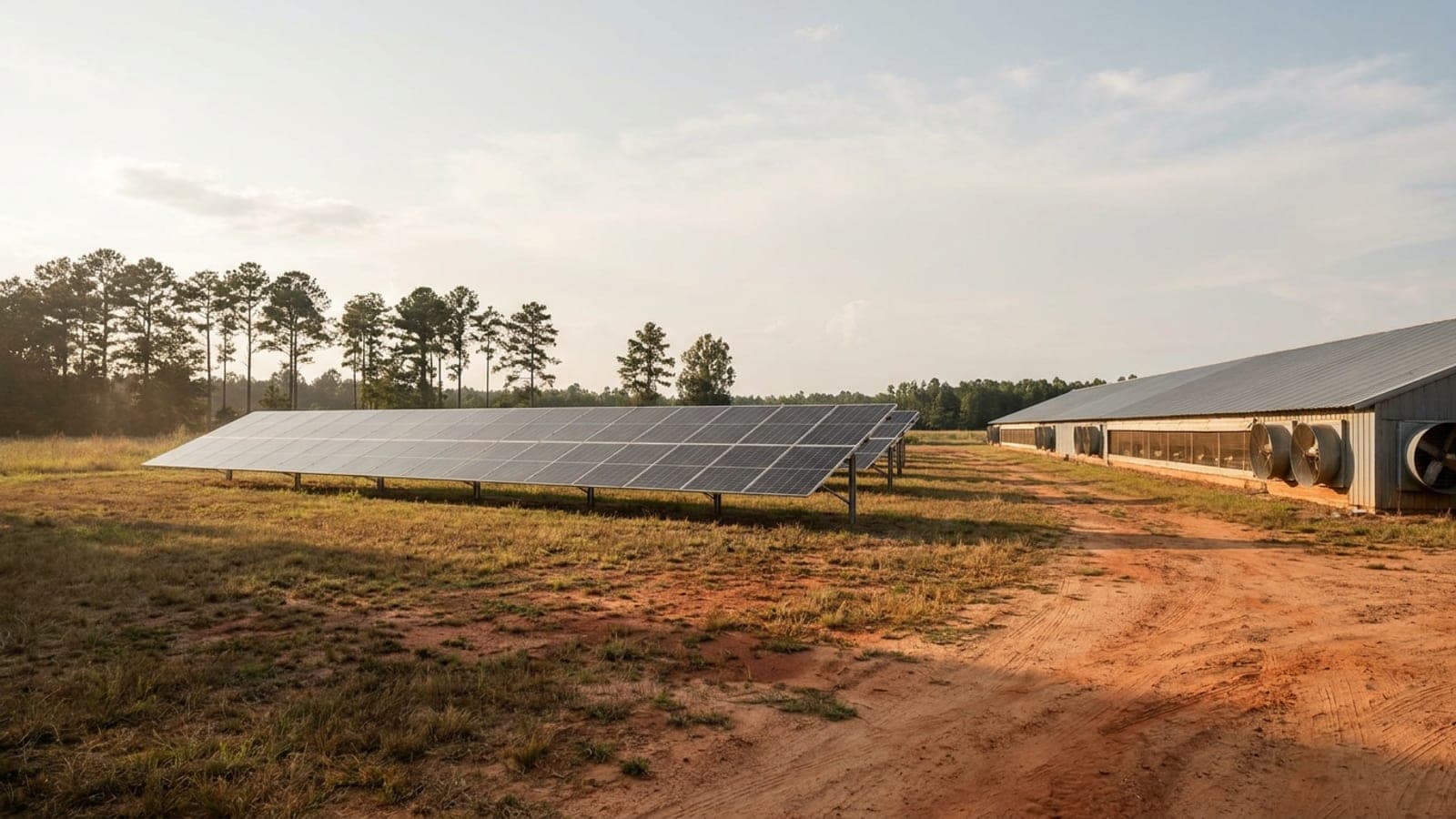
REAP is one of the incentives we work with on solar for poultry farms, a portfolio of over 4.8 MW of installed systems that includes a 450 kW system across fourteen broiler houses. In every one of those projects the engineering came first. The energy assessment, the single-line diagram and the interconnection application are the same documents a grant reviewer scores and a utility approves, and we produce them once under one commercial solar EPC contract. What a complete application contains, section by section, is set out in our REAP application guide, and the sizing logic that keeps a poultry system between 26 and 35 kW per house is in what 4.8 MW of poultry solar taught us.
The REAP grant for solar page on this site describes the program as it has run in past cycles. We will update it the day USDA publishes the new regulation and the funding notice that follows it.
If you farm or run a business in rural Georgia, Florida or the Carolinas and want to be first in line when the window reopens, send us twelve months of utility bills. We will produce the energy assessment and the system design now, so the application is finished before the rule is.