
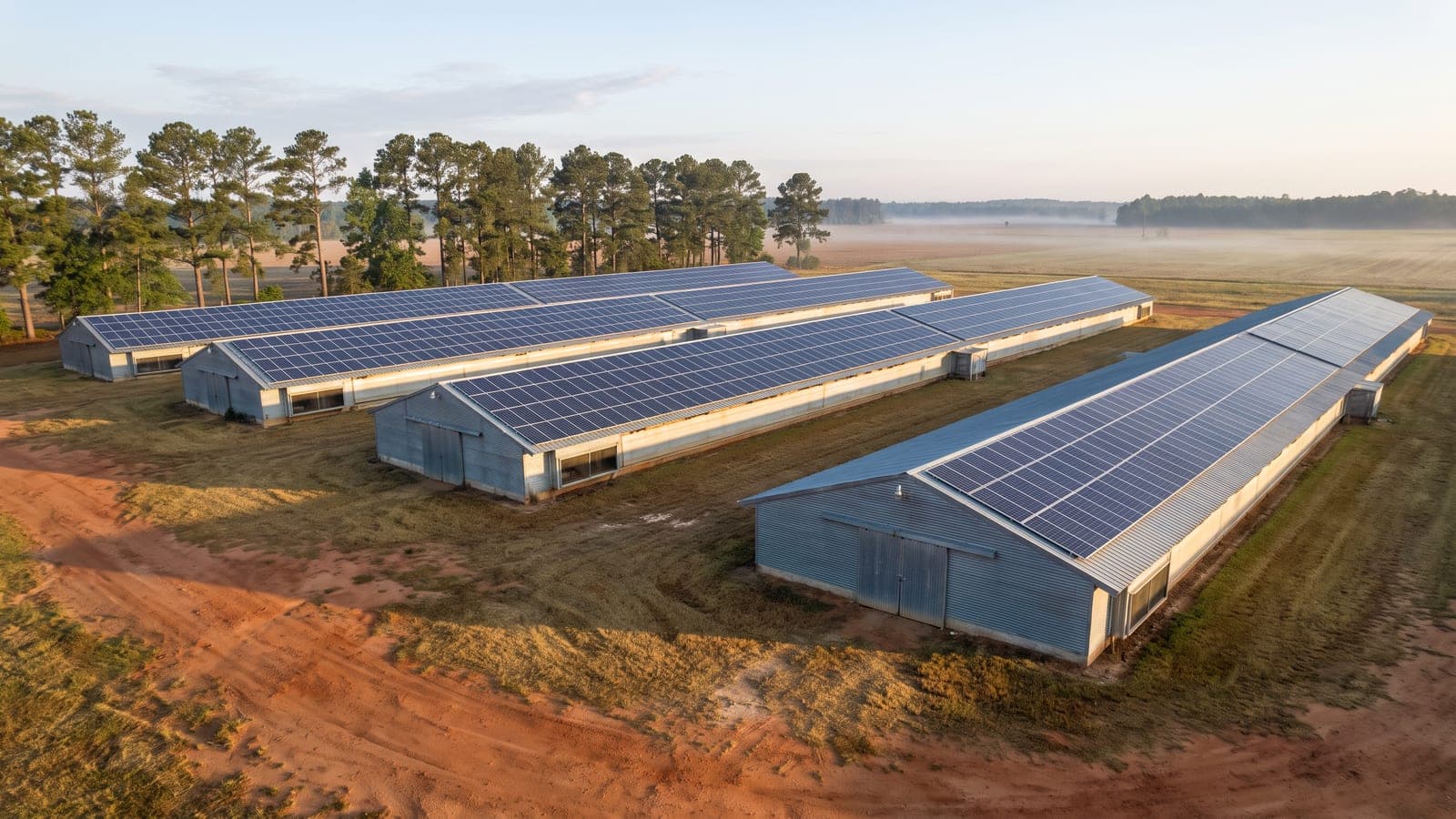
USDA's rewritten rule for the Rural Energy for America Program sets the REAP grant cost share at a minimum of 75 percent of project cost, which leaves the grant itself covering a quarter. The final rule took effect on October 16 and the figure sits in section 4280.122 with the agency's own worked example attached: on a project costing $1,000,000, cost sharing has to be at least $750,000. The maximum grant request is $500,000 for a renewable energy system and $250,000 for an energy efficiency improvement, and the minimum request for either is now $1,500.
How much of a solar project does a REAP grant cover?
A quarter, at the top end, and the rule is specific about what the other three quarters have to look like. Cost sharing funds must be available for use during the project period and must go to allowable expenses. Unrecovered indirect costs cannot be counted toward the share at all. The rule also renamed matching funds to cost sharing, to line up with the federal grant rules at 2 CFR part 200.
These figures also moved house. Minimum and maximum awards used to sit in section 4280.115, which is now reserved, and the old provision on maximum grant assistance was removed rather than relocated. Section 4280.122 is what governs an application today, and it reads as a list of tests to clear rather than a target to aim at.
Which number limits a project, the 25 percent or the $500,000?
The two limits cross at a project cost of $2 million. Below that, the 25 percent share is what binds. A $900,000 rooftop array supports a grant request of $225,000, well clear of the ceiling. Above $2 million the ceiling takes over and the grant covers a thinner slice, since $500,000 of a $3 million project works out to about 17 percent.
Commercial systems in Georgia and the Carolinas mostly fall in the 100 kW to 2 MW range, which puts nearly all of them on the 25 percent side of that crossover. The ceiling is a real constraint for a large multi-building industrial project and close to irrelevant for everything else.
A second limit runs alongside it. The rule makes a project ineligible when REAP funding, grant and guaranteed loan counted together, would represent more than 75 percent of project cost. An applicant can still pursue both instruments for the same project, a grant under 7 CFR part 4280 and a guaranteed loan under 7 CFR part 5001, but the combined total stops at three quarters.
A third test sits inside the budget. A project whose budget carries more than 25 percent unallowable costs is ineligible outright. At 25 percent or less the agency strips those costs out before it considers anything else, which lowers the award, and the rule states that a project is not eligible if that removal takes the award below the $1,500 minimum. Working the other way, up to 25 percent of project costs for distribution components and ancillary infrastructure count as eligible costs in a renewable energy system project.
What this changes for a Southeast facility
The arithmetic now starts from the equipment rather than from the grant. A 450 kW array across fourteen broiler houses is sized by the fan load and the roof area, and under the post completion process this rule introduced, the application comes after the system has run for a year. Deciding what the project is worth on its own, then adding a quarter of the cost as the best case from REAP, is the order that survives a competitive cycle. The reverse order, where the grant is assumed and the design is built around it, has one bad outcome and no good ones.
Sizing is tighter where a battery is involved. For a renewable energy system with an associated storage system, the rule limits total annual production to 120 percent of the applicant's consumption over the twelve months before installation, or to the maximum the interconnected utility allows if that is lower, and the storage itself must not exceed 100 percent of the size of the array it is paired with. The rule adds a payback test as well: the simple payback period has to be equal to or less than the useful life the agency approves for the system.
One eligibility detail reads well for a different industry. The rule lists for-profit hotels providing short term housing of 30 days or less among the residential uses that do qualify, which keeps solar for hotels and resorts inside the program where the property is in a rural area.
Comments on the rule are open until November 2, 2026 under docket RBS-26-Business-0529. An operator who thinks the cost share or the ceiling misreads how farm energy projects are financed can say so on the record, and USDA asked for that input when it published the rule as a final rule with comment period.
What carries the rest of a commercial project
Tax and the bill, in that order. The 30% federal investment tax credit reduces tax owed rather than income taxed, and Section 179 expensing and MACRS depreciation apply to the same equipment in the same tax year. Both are claimed on the owner's own return instead of won in a competition, which is why we build a budget on them and treat a grant as upside.
Then the power bill does the rest. Swainsboro Supply Company cut about $1,800 a month with a 117 kW ground mount array, and that saving shows up every month regardless of whether an application window is open. Across more than 4.8 MW of solar panels for poultry farms we have not yet built a system whose case rested on a grant arriving.
If an application is still the plan, how to apply for a USDA REAP grant sets out the sequence, and the USDA REAP grant for solar carries the program detail. A grant is competitive and USDA validates it, so the project has to stand up without one before the paperwork is worth starting.
Send twelve months of utility bills and we will come back with the array the load actually supports, what a 25 percent request would amount to on it, and what the payback looks like with the grant left out entirely. Request a commercial solar proposal and we will start from the bills.